CLIMATE CHANGE // NATURE // ART // MULTIDISCIPLINARY COLLABORATION
Research
Art installations
Pop-up exhibitions
Curation
Influenced by the profound consequences that natural disasters, climate change, and human impact has on our planet, Nature is Greater Than Us is an ongoing experimental art research project investigating and responding to people’s personal stories who have been affected by environmental destruction in disasters around the world.
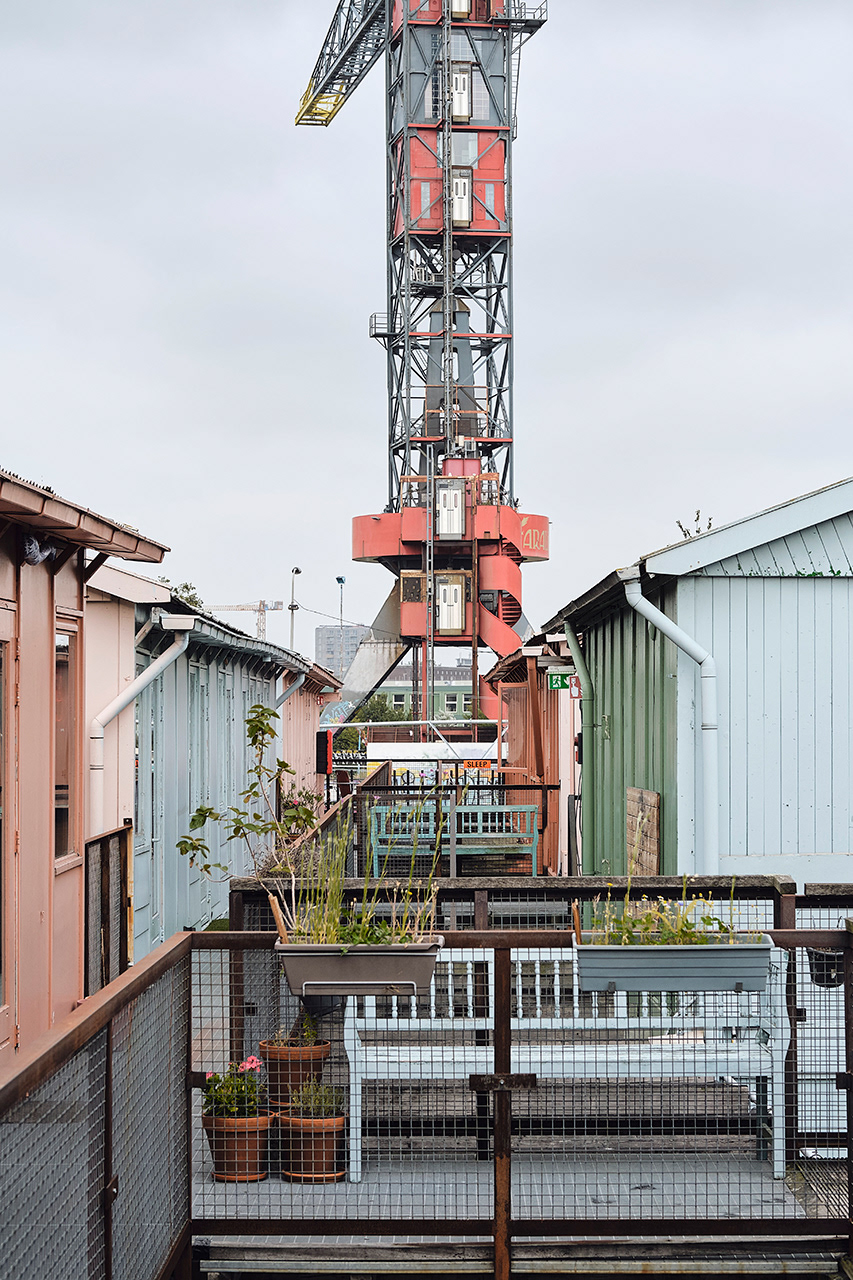
The work unfolded in a pop-up space at Treehouse NDSM over the course of a few months, inviting artists and the public to engage with the multimedia work as it developed. The research began with interviews of people present at specific events, for example the Porto Alegre floods in Brazil 2024 and the Los Angeles fires in the USA 2025. Adopting a mixed-media approach, the conversations were translated to multiple formats: audio recordings, photographs, message transcripts, illustrations, paintings, found objects, and other mediums. The research aims to investigate the context around these events, consult professional opinions with politicians & climate specialists, question humanity’s role & relationship to nature, consider potential action that can be taken, and contemplate where we go from here.
Nature is Greater Than Us provided an open space for experimentation in how these stories can be translated into art. Other artists were invited to collaborate in the pop-up over the 3 months, contributing their own ideas, research and art to enrich the project. The space doubled as a research container at the same time as an exhibition space, developing as the project progressed.
At the end of every month, we hosted an exhibition day sharing the project progress and a special program for the public; however, visitors were welcome in the space throughout the months to discuss the work and themes. Read more about the exhibitions below.
As an ongoing project, I aim to continue the research and develop the works through future pop-ups or exhibitions. If you're interested in contributing, please get in touch.
Artworks
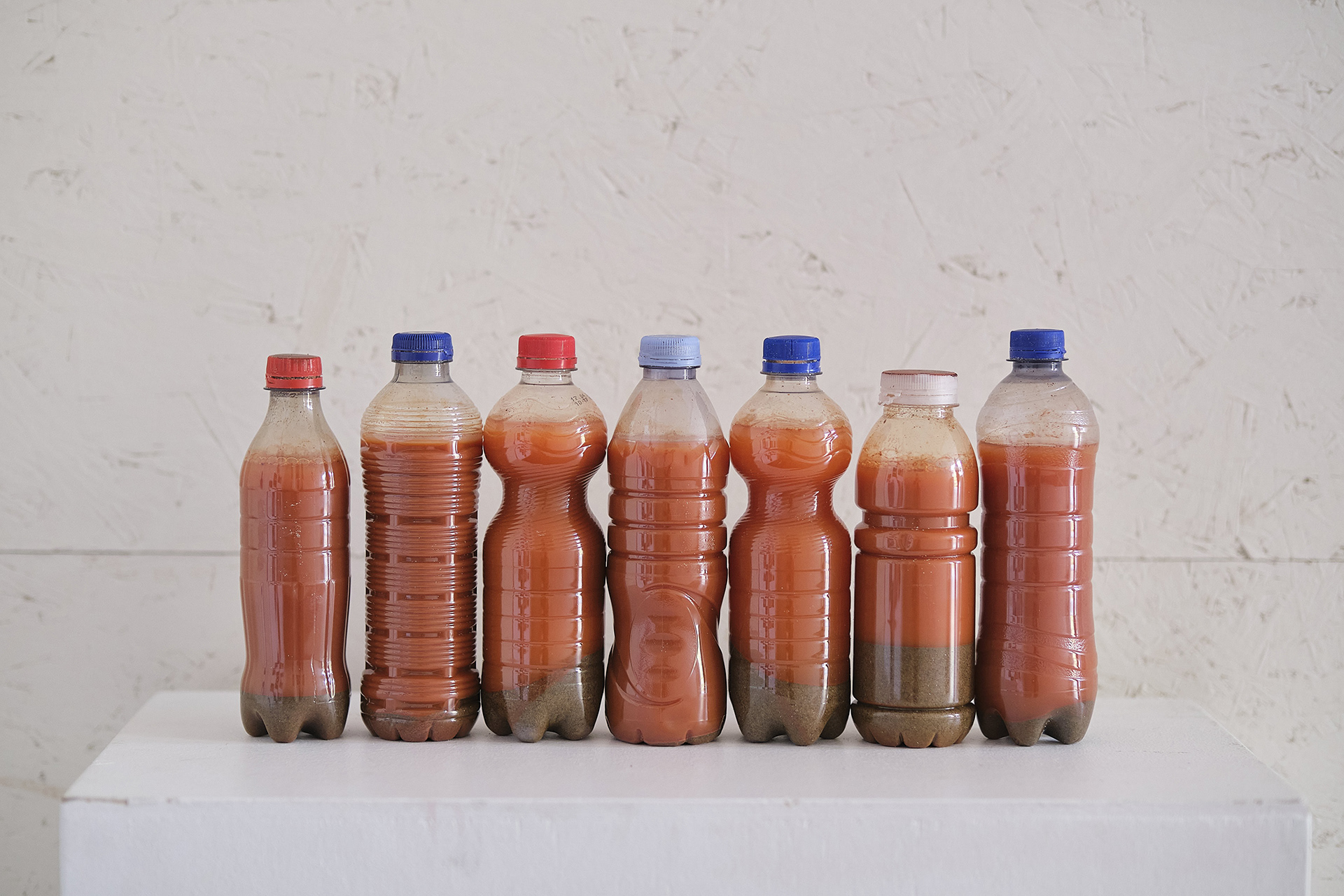
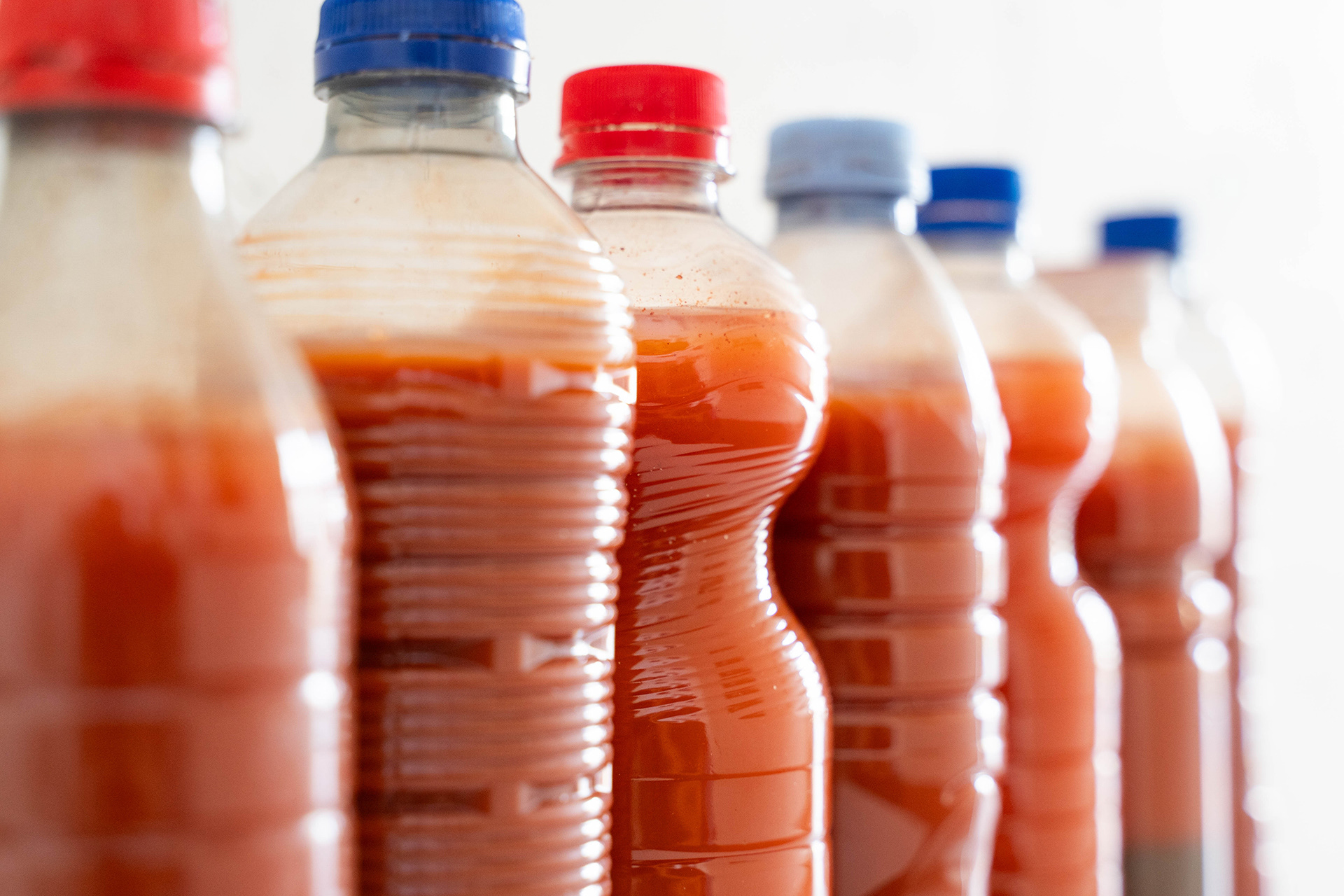
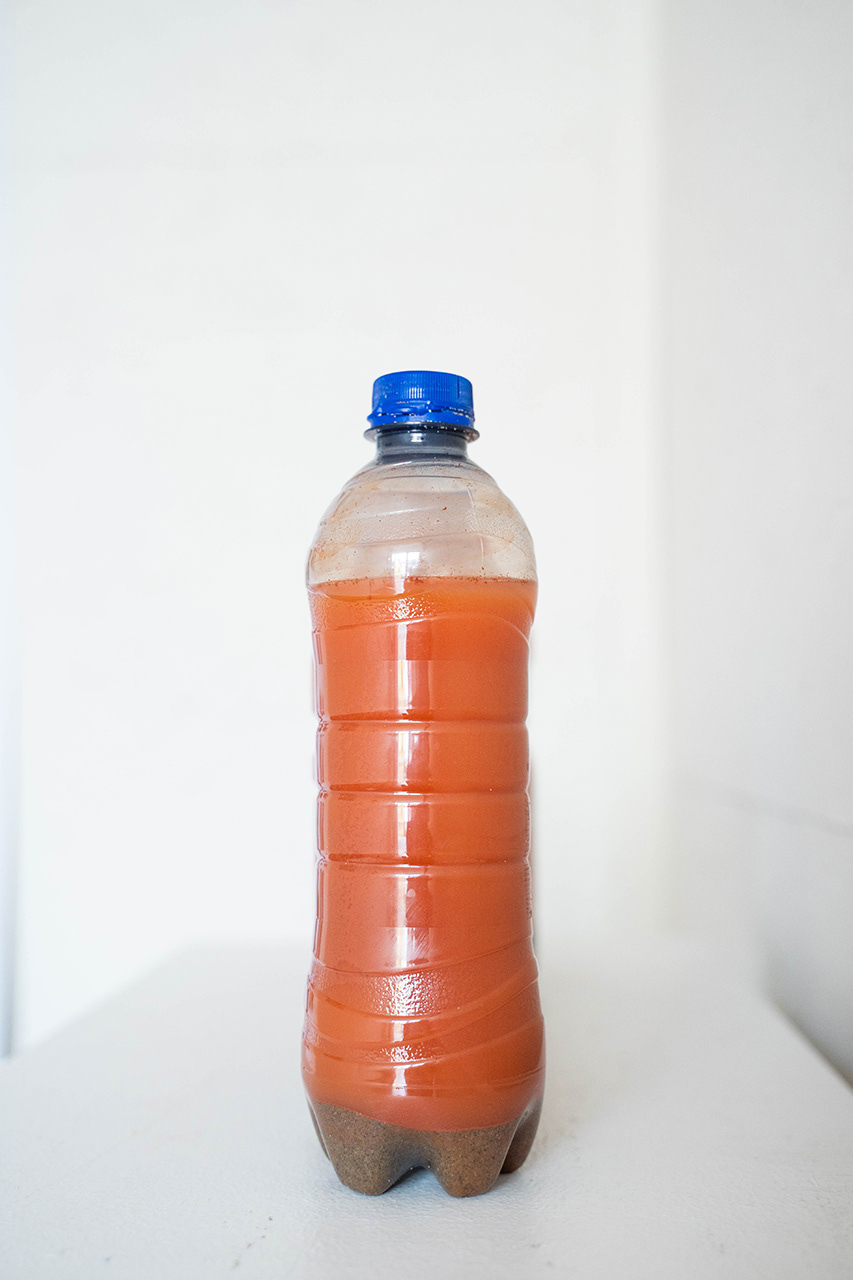
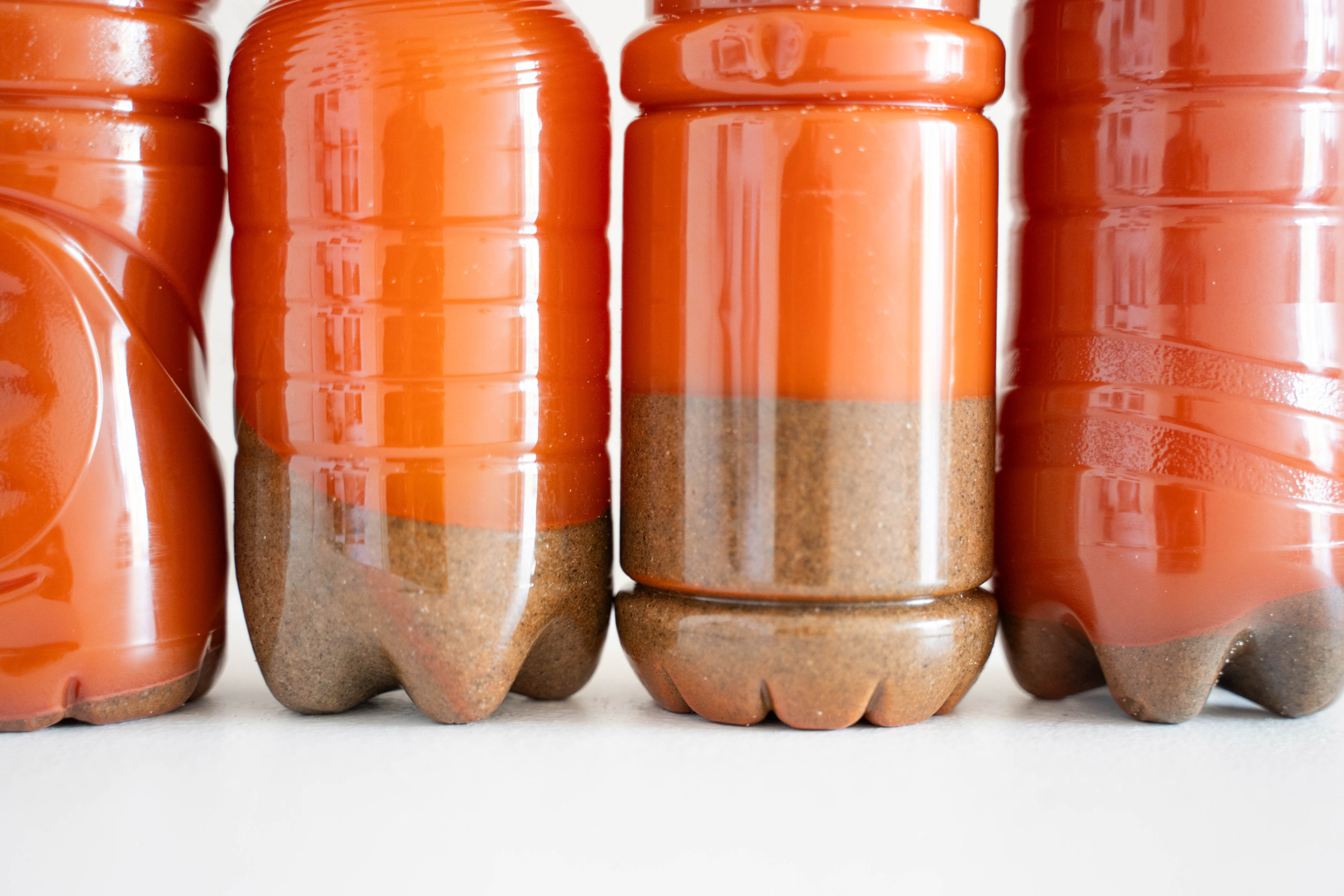
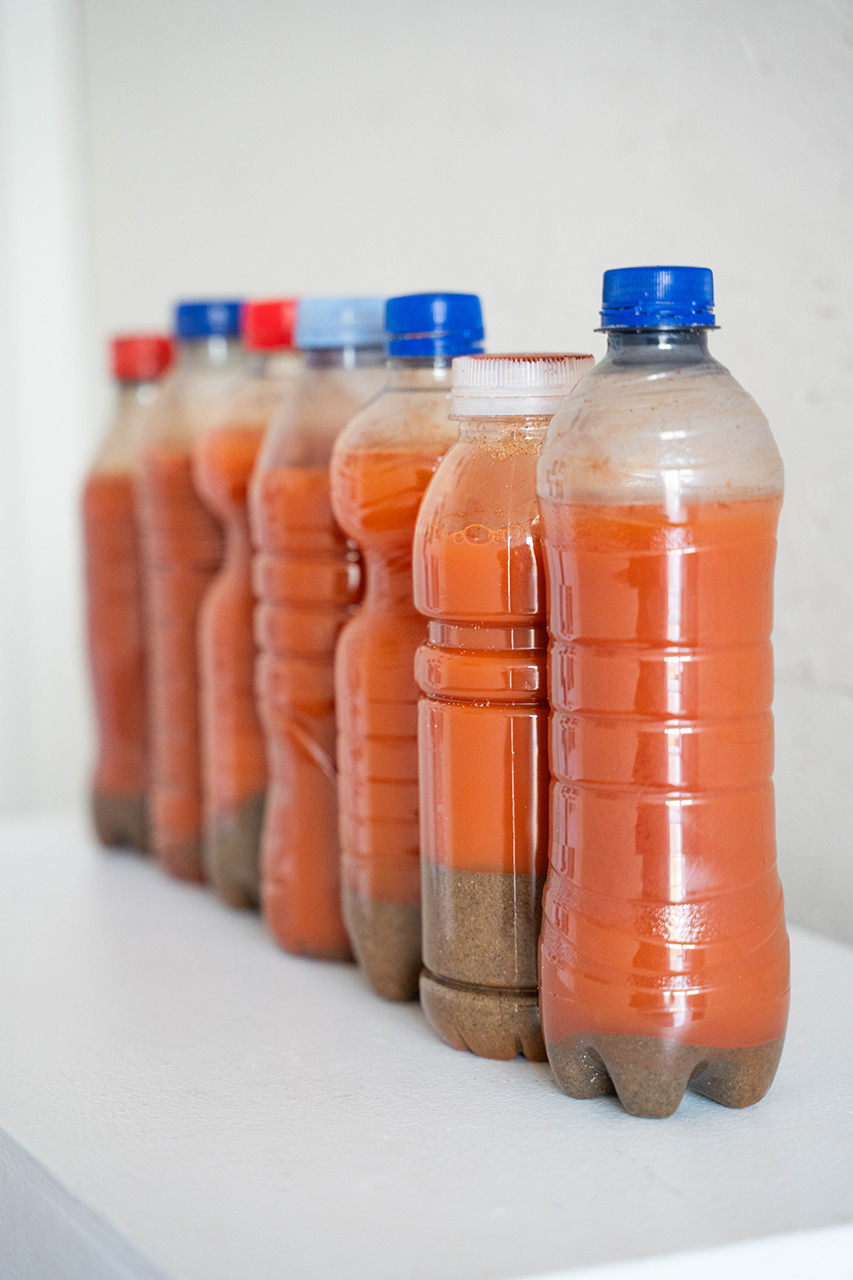
Water, water, everywhere, not a drop to drink
(2025)
Mixed media installation (bottles, water, acrylic paint, sand)
45 x 23 x 7 cm
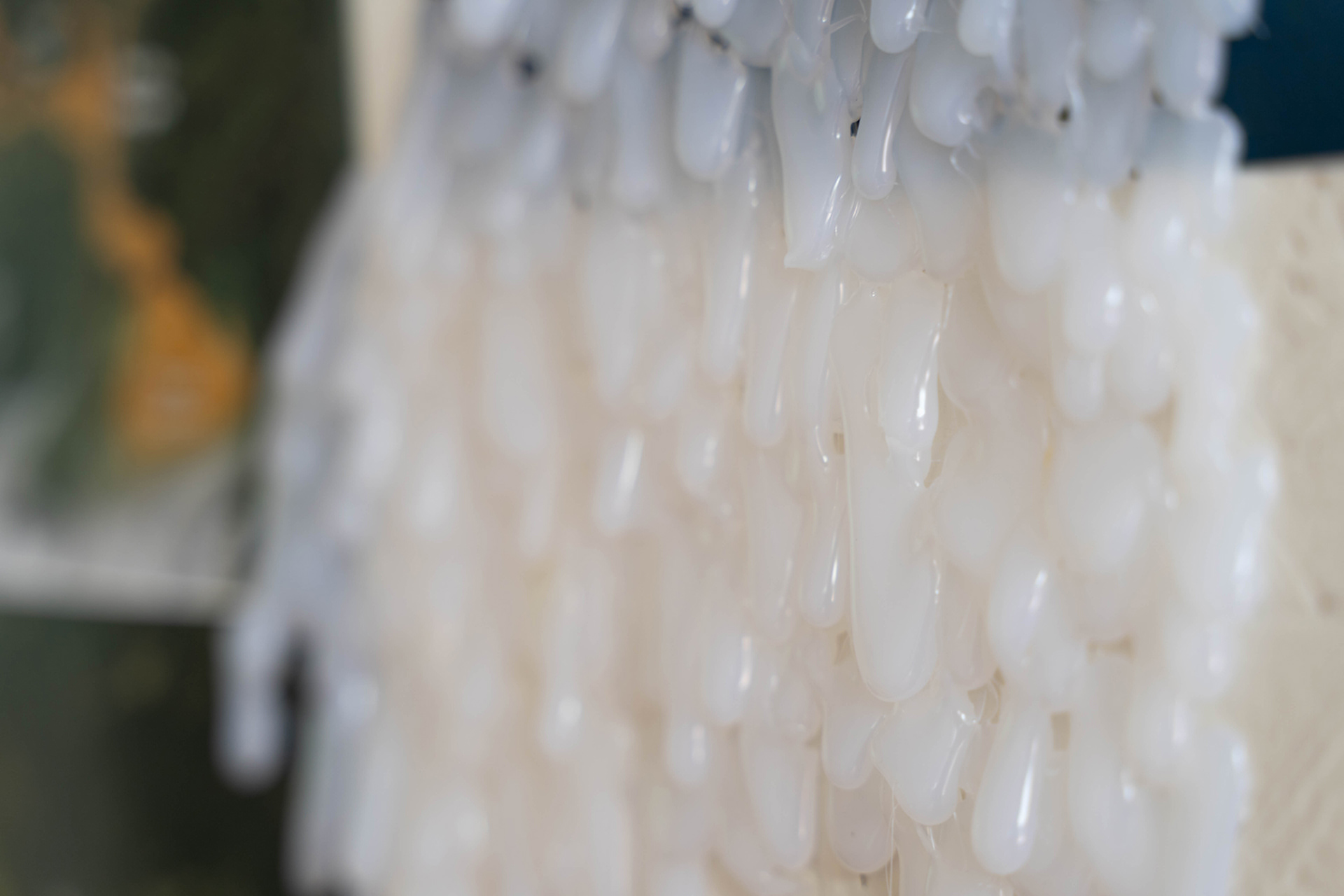
This installation exhibits water bottles filled with mud, representative of the muddy, orange floodwaters (lamas alaranjadas) that engulfed Rio Grande do Sul in 2024 during its most disastrous flood in history. As heavy rainfall overflowed the Guaíba river, thousands of people were left without access to clean drinking water, despite being ironically surrounded by water. Mobilizing donations from around the country, rescue efforts prioritized access to bottled water for the victims. The piece invites viewers to reflect on our dependency on water and its contradictions: it’s essential for life, but simultaneously capable of such destruction.
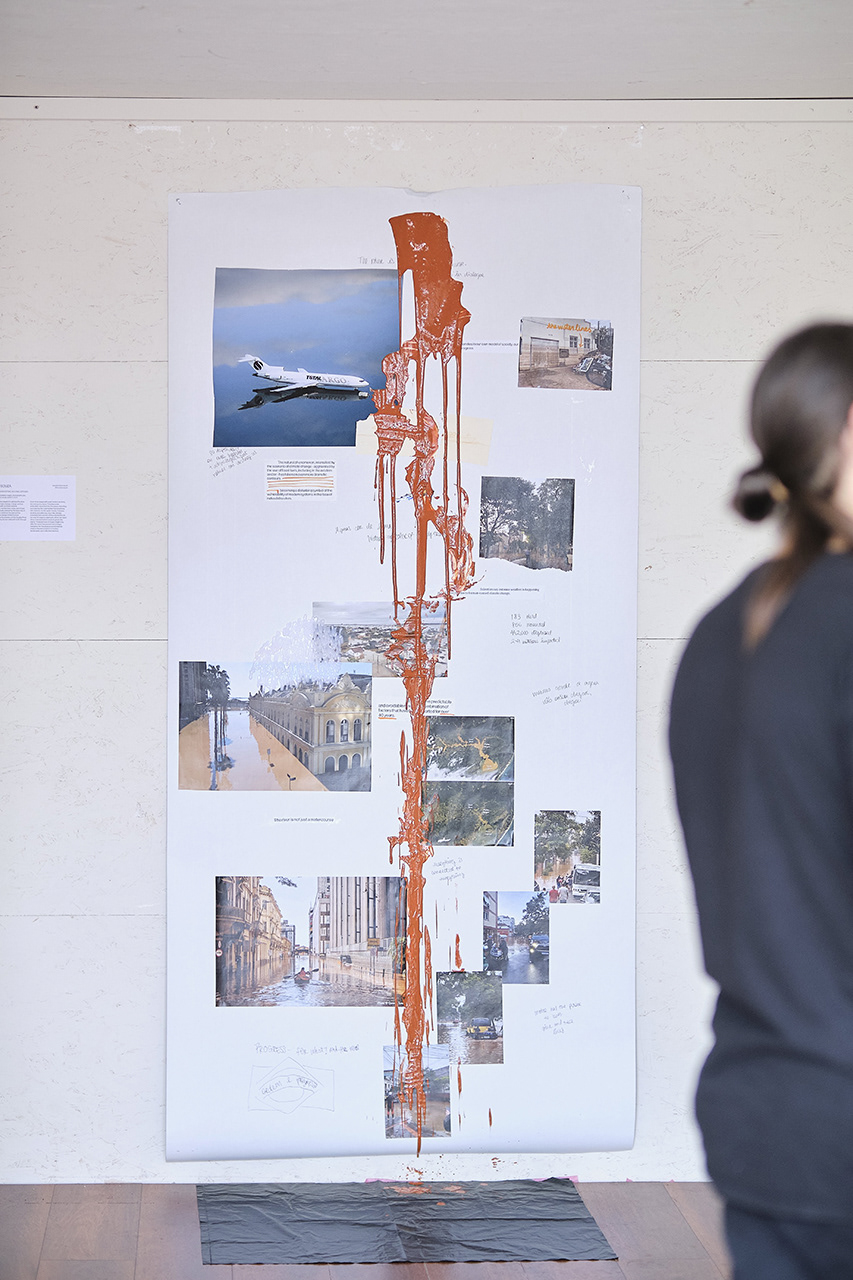
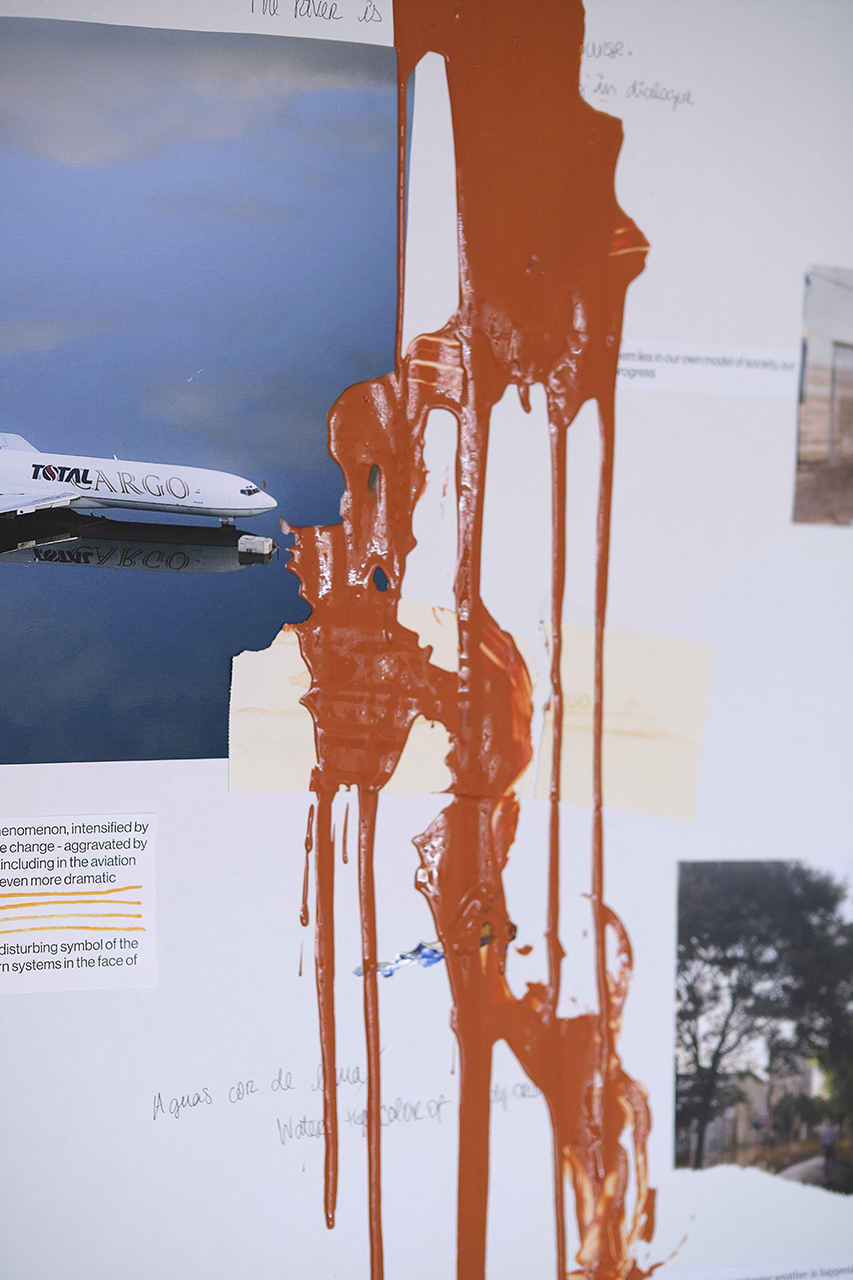
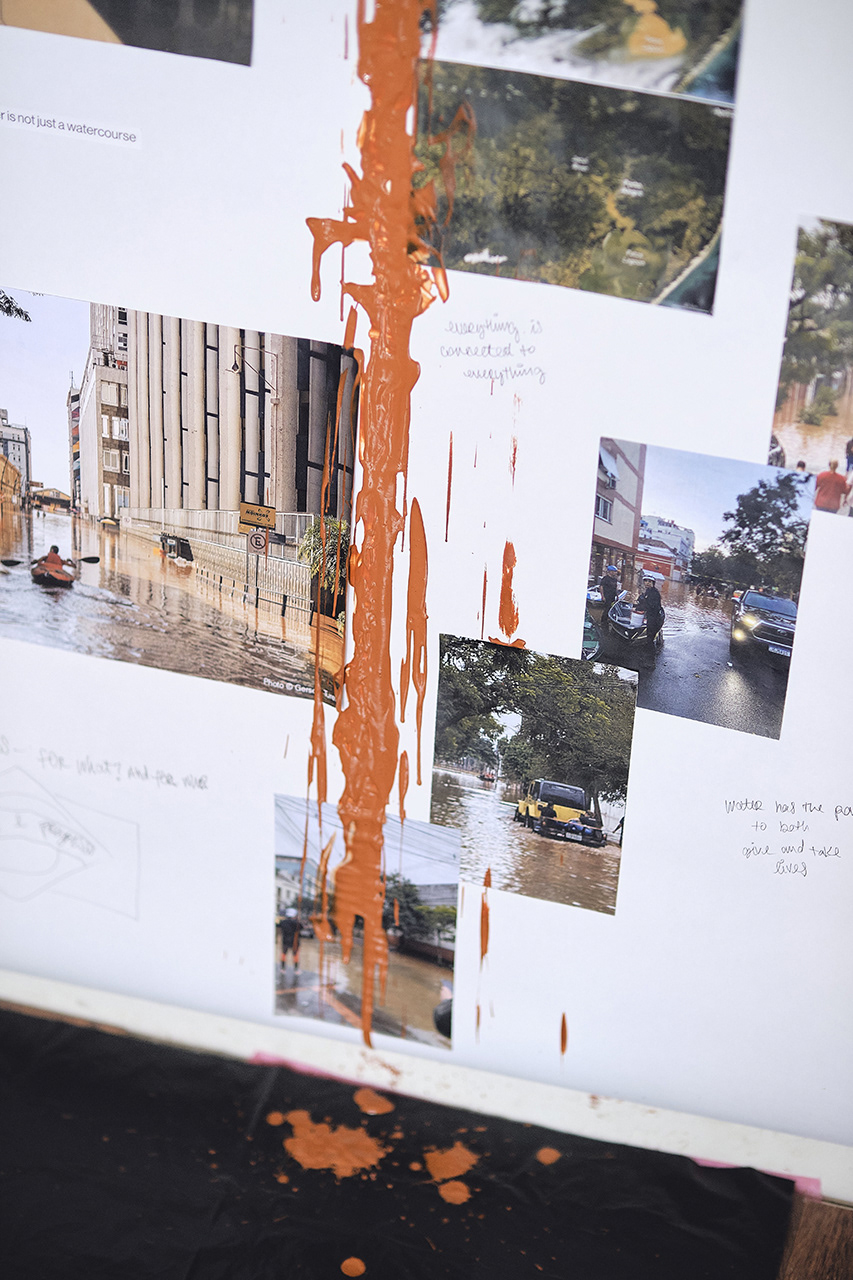
When the river spoke, no one listened
(2025)
Mixed media installation (paper, photographs, pen, glue, water, sand, acrylic paint)
100 x 220 cm
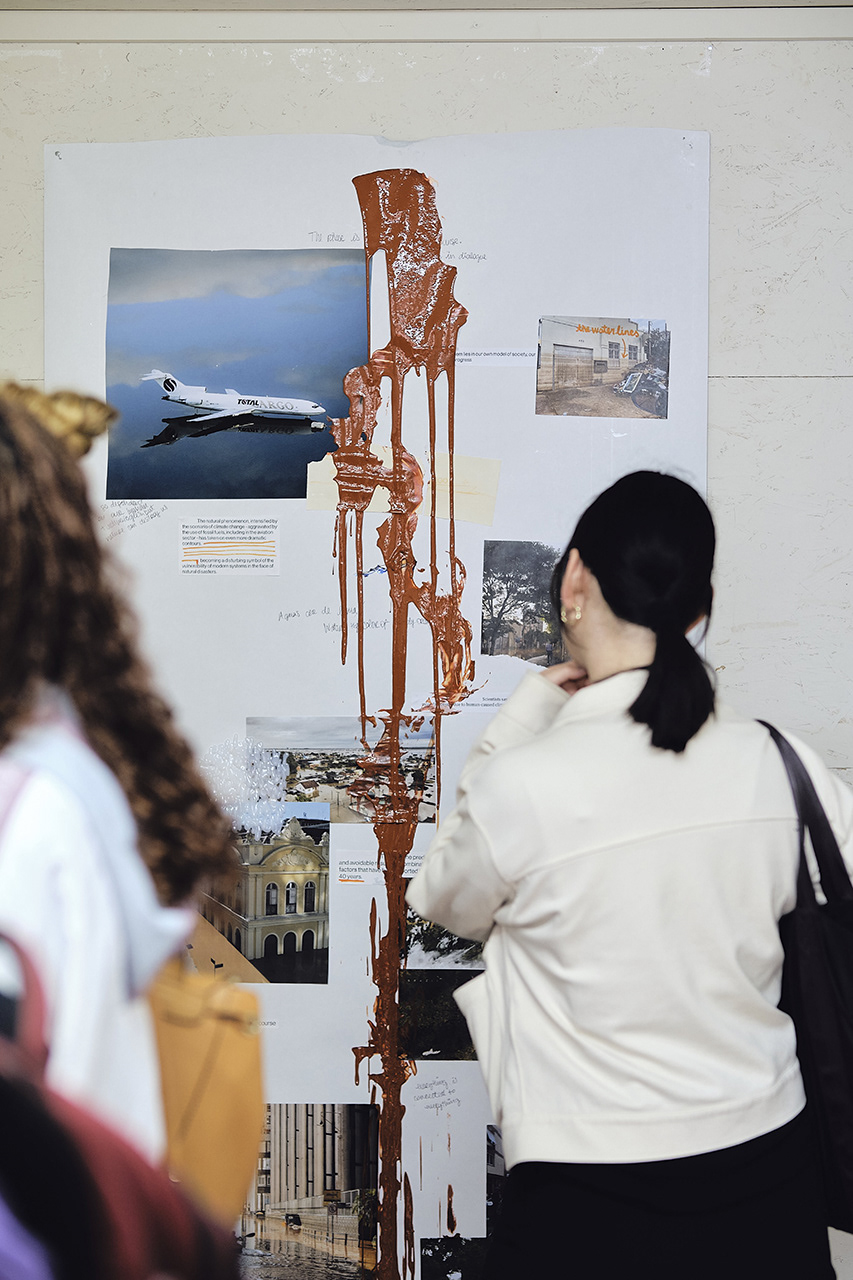
The work invites viewers to witness the slow violence of climate change in real time. A large vertical scroll layered with archival material (photographs, handwritten notes, and mixed media) is gradually stained by the slow drip of mud trickling down the scroll in real time throughout the exhibition. The orange-tinted mixture references the floodwaters of the Guaíba River in Brazil, forging its own wild path through obstacles.
Each drop seeps with quiet tension, evoking the ticking of a clock. Time becomes embodied, absorbed into the paper, distorting and staining the material like trauma sinking into memory. As the water flows over news articles and scientific facts warning of these potential disaster, it erases, drowns, and silences the words, much like climate scientists had warned of the potential floods for over 40 years to deaf ears. When the liquid dries, it leaves behind cracked, ghost-like stains. These echoes of impact linger long after the event has passed, becoming a metaphor for the physical and emotional residue disasters imprint on bodies, landscapes, and collective memory.
The River is a Body
(2025)
Mixed media collage: paper, photography, glue, acrylic paint, marker, pen, colored pencil
180 x 150 cm
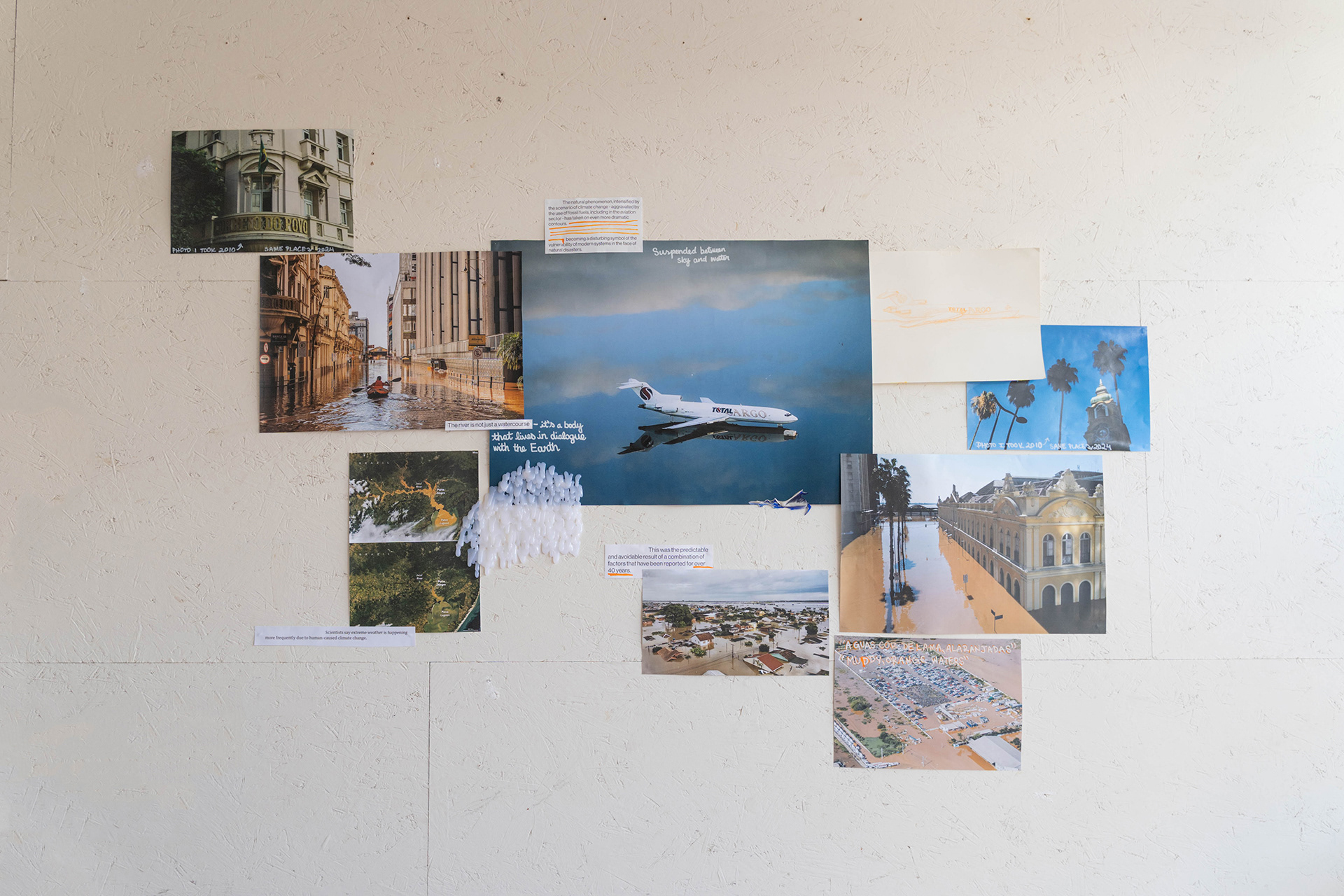
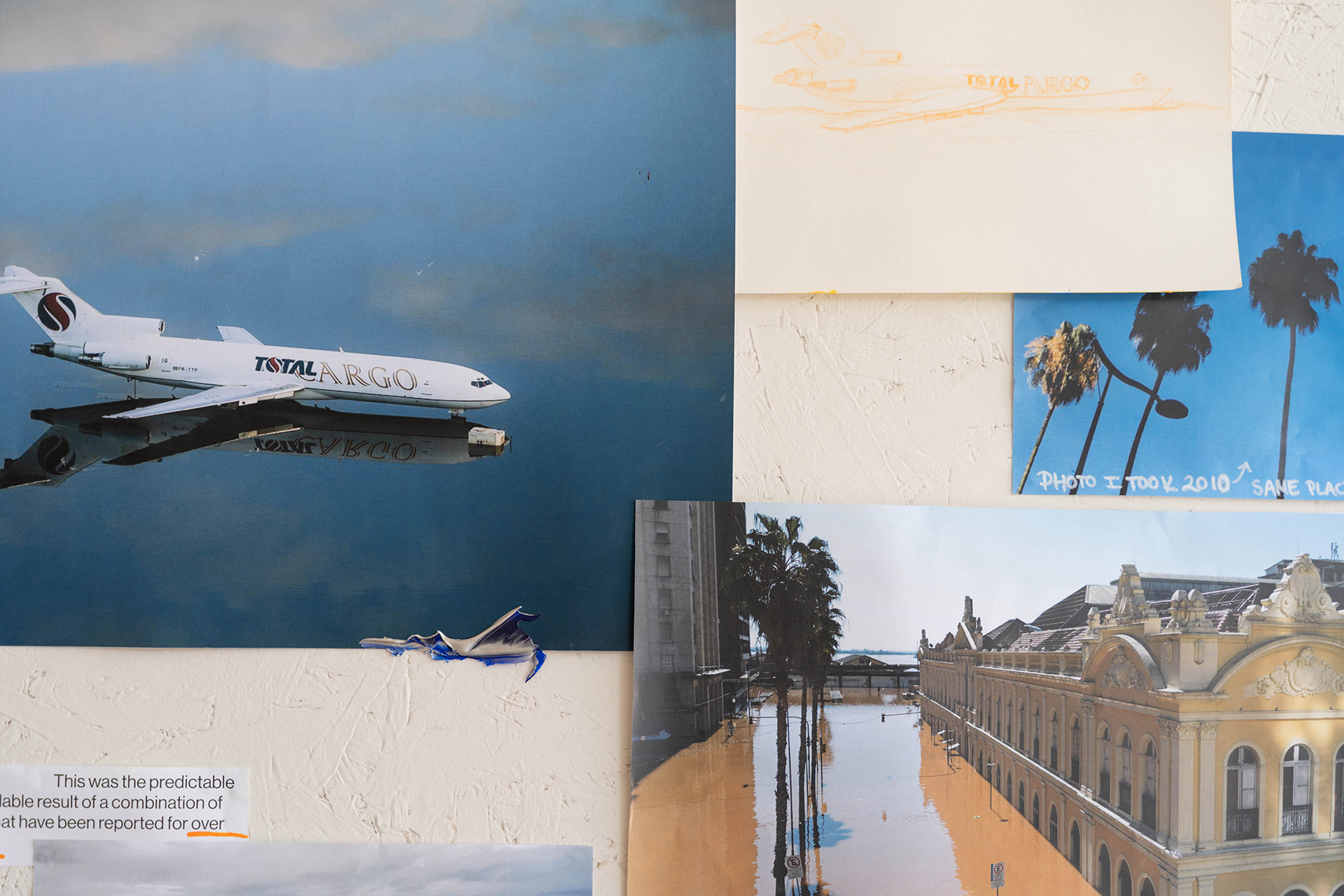
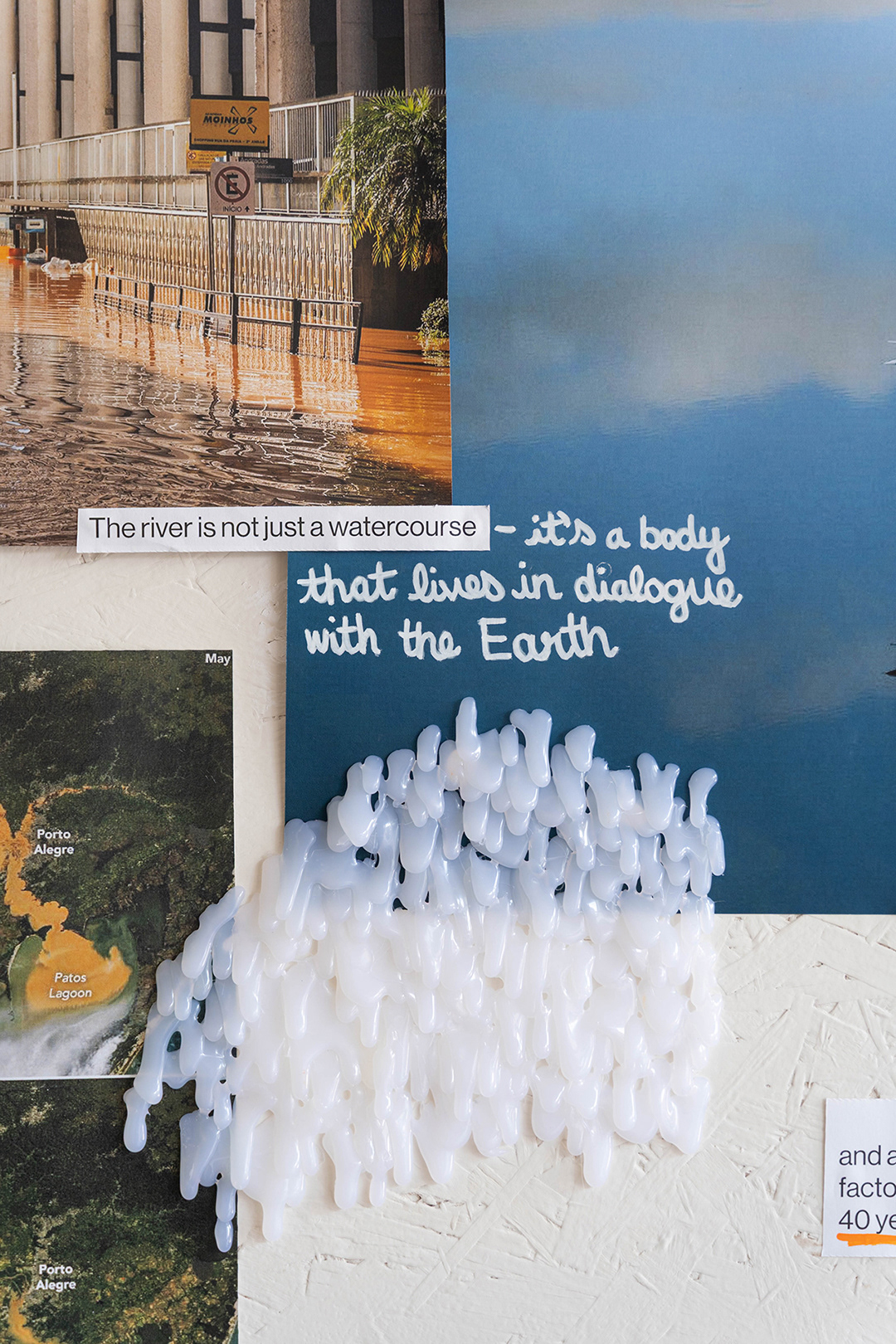
This piece is a mix of documentary and personal artistic response to the devastating floods that took place in Brazil in May 2024 as a result of intense rainfall, structural neglect, and environmental exploitation. A mixed-media collage layering imagery, news article excerpts, handwritten thoughts and material exploration. The combination of materials reflects how we formulate our understanding of these events: we're fed information via news outlets, social media, and our own personal experiences.
Photographs that went viral (such as the airplane stranded on the flooded airport runway) and my own photographs from my family's hometown of Porto Alegre years before the flood link my personal connection to the physical spaces that became submerged. Through this work, I invite viewers to question our relationship with the natural world and the motives behind much of its destruction.
In my research, one of the strongest statements that stood out to me inspired the title of this piece: "The river is not just a watercourse - it's a body that lives in dialogue with the Earth." The river is not simply a static container that holds water; the earth and water are affected by what we put into them, by how we treat the environment around it, by how we interact with it. And if we mistreat it, the river is a living body that will react, that will have limits.
The soil of the river Guaíba was overworked after years of excessive agricultural production, exported and sold internationally to "improve" the Brazilian economy. But when the local population suffers from famine and the land of the river cannot absorb the rain, is this really what's best for the land? For its people? Who is really benefitting from the "economic development"?
So often we treat nature as if we are the dominant beings on this planet. But organic matter is affected by our impact, and once we abuse our resources we will be the ones facing the consequences. We are not greater than nature if nature can destroy us.
Photographs that went viral (such as the airplane stranded on the flooded airport runway) and my own photographs from my family's hometown of Porto Alegre years before the flood link my personal connection to the physical spaces that became submerged. Through this work, I invite viewers to question our relationship with the natural world and the motives behind much of its destruction.
In my research, one of the strongest statements that stood out to me inspired the title of this piece: "The river is not just a watercourse - it's a body that lives in dialogue with the Earth." The river is not simply a static container that holds water; the earth and water are affected by what we put into them, by how we treat the environment around it, by how we interact with it. And if we mistreat it, the river is a living body that will react, that will have limits.
The soil of the river Guaíba was overworked after years of excessive agricultural production, exported and sold internationally to "improve" the Brazilian economy. But when the local population suffers from famine and the land of the river cannot absorb the rain, is this really what's best for the land? For its people? Who is really benefitting from the "economic development"?
So often we treat nature as if we are the dominant beings on this planet. But organic matter is affected by our impact, and once we abuse our resources we will be the ones facing the consequences. We are not greater than nature if nature can destroy us.
Progresso (Progress)
(2025)
Mixed media collage: paper, photography, acrylic paint, marker, pen
120 x 100 cm
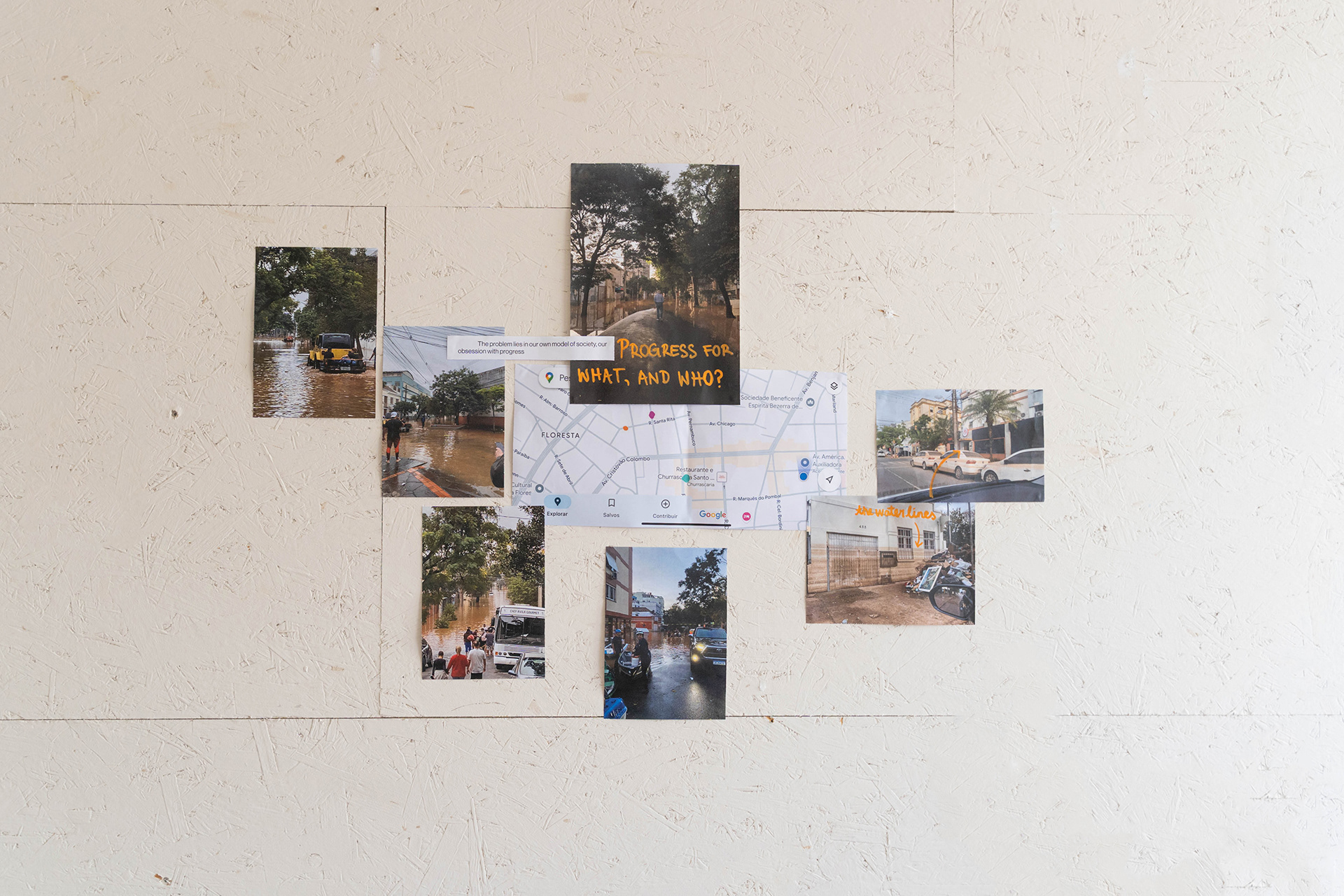
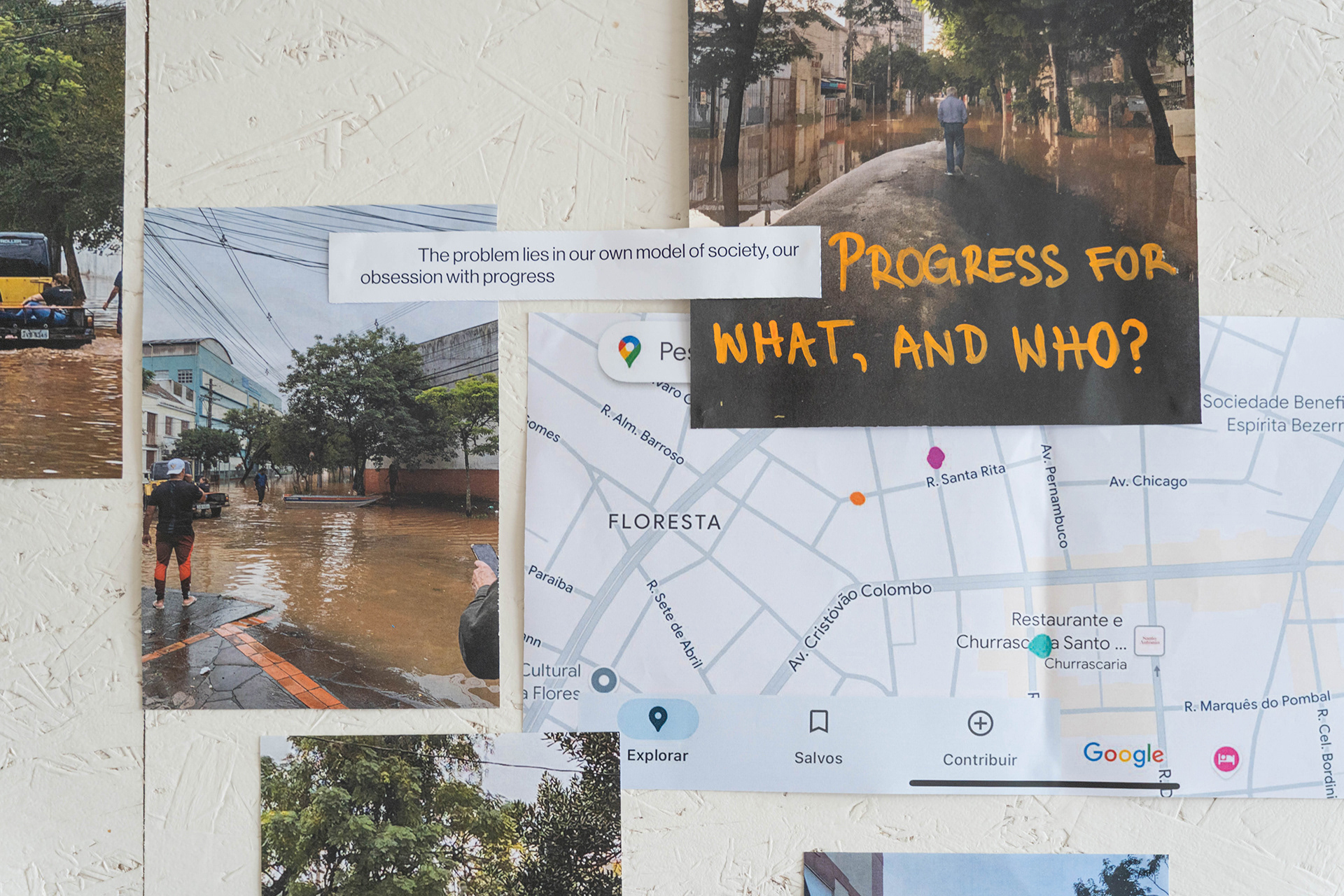
A mixed media collage piece mapping locations where my cousin evacuated in Porto Alegre, Brazil, during the 2024 floods. The artwork includes photos from their daily walks around the neighborhood, capturing the community rescue efforts and monitoring how high or low the water levels were.
When the agricultural industry discusses progress for the country through their development, what are they really talking about? Progress for what, and for who? For the Brazilian economy? To develop the country's foreign exports? And at what cost? Does destruction of the environment and innocent lives justify this "progress" when local residents are impacted so negatively? Do they prioritize financial profit over responsibility? Prioritize agricultural development to export to other countries over feeding their own empoverished population?
It's ironic that we have the words "Ordem e Progresso (order and progress)" on the Brazilian flag.
When the agricultural industry discusses progress for the country through their development, what are they really talking about? Progress for what, and for who? For the Brazilian economy? To develop the country's foreign exports? And at what cost? Does destruction of the environment and innocent lives justify this "progress" when local residents are impacted so negatively? Do they prioritize financial profit over responsibility? Prioritize agricultural development to export to other countries over feeding their own empoverished population?
It's ironic that we have the words "Ordem e Progresso (order and progress)" on the Brazilian flag.
Are You Safe?
(2025)
Mixed media installation: collage, paper, photography, audio
90 x 90 cm
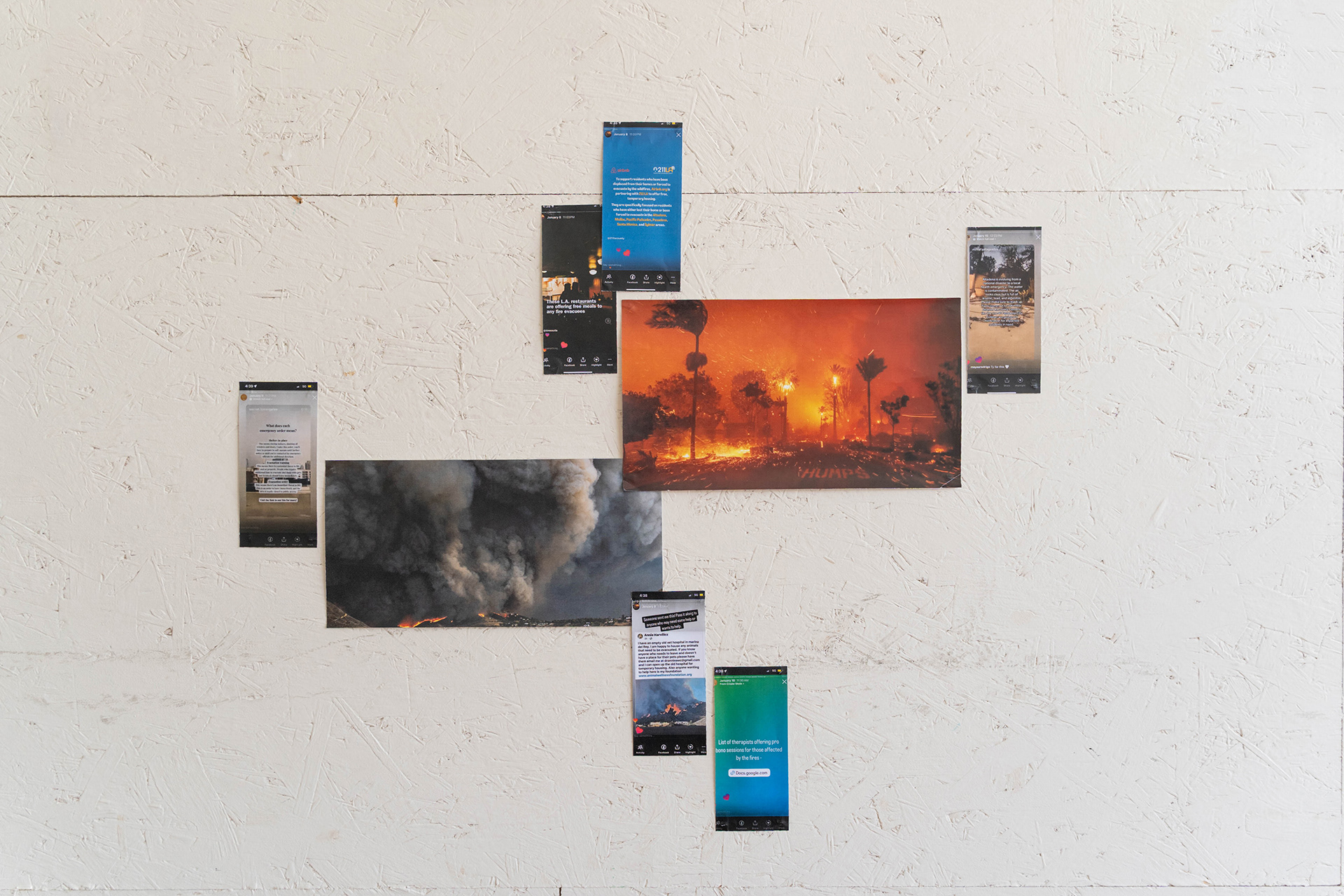
This multimedia artwork reflects on how we witness disaster, focusing on the Los Angeles Wildfires of January 2025. It's a combination of news article photographs, social media story screenshots, and audio snippets of a conversation with one of my sisters on the topic.
My sister lives in LA, and when the wildfires began (only 6 months after the Brazil floods of 2024), I couldn't help but think that these disasters are happening more frequently, more closely to people I love, and at a larger scale. Different events in very different parts of the world, but caused by many similar factors: lack of resources, neglect, willfull ignorance of scientific research, climate change exacerbation, pollution.
Researching the LA wildfires from a distance, I felt odd witnessing the disaster from far away: so much constant information was being fed to me by the media (onlines news outlets), through social media, via my sister and her friends. Caring from afar, wanting to stay updated, wanting to know if everything was going to be alright. Feeling like I wanted to help, but not being able to contribute anything.
I became interested in the way people use social media as a means of communication during the emergency: sharing information with each other; educating others on the status of the situation; sharing resources; updating which areas need help or attention. I was also interested in the beautiful community solidarity that emerged to support those affected: restaurants offering free meals; empty airbnbs offering shelter; psychologists offering trauma recovery; resources for legal help; what can be donated and where; volunteers helping wherever they can.
Are You Safe? encompasses the caring behaviours we express during these struggles, and gives value to the voices in their many forms (digital, written, spoken).
Exhibitions
Pop-up 1
May 2025
Works in progress exhibited about the Rio Grande do Sul floods of 2024 and the Los Angeles Wildfires of 2025 by artist Bruna Souza.
Pop-up 2
June 2025
Exhibiting artists:
Bruna Souza
Karin Balog
Denis Gallen
Seçil Güven
Lyanne Keegstra
Short film screenings:
The Definition of Silence - Karin Balog
Mountains of Life - Lyanne Keegstra
This was the first group exhibition, combining works in photography, sculpture, video and installation.
Pop-up 3
July 2025
Exhibiting artists:
Bruna Souza
Vere Maagdenberg
Karin Balog
Seçil Güven
Denis Gallen
Jacco Groen
Iyamari
Lyanne Keegstra
Laura Goossens
Roberta Petzoldt
Short film screenings:
The Definition of Silence - Karin Balog
Absolute Zero - Karin Balog
Typhoon Yolanda - Jacco Groen
Mountains of Life - Lyanne Keegstra
Telescore – Japanese Cherry Blossom - Iyamari
Performances:
Nothing But Nerve Endings - Laura Goossens
Failure Notice Resurrection - Roberta Petzoldt
We Are Part of Nature - Iyamari
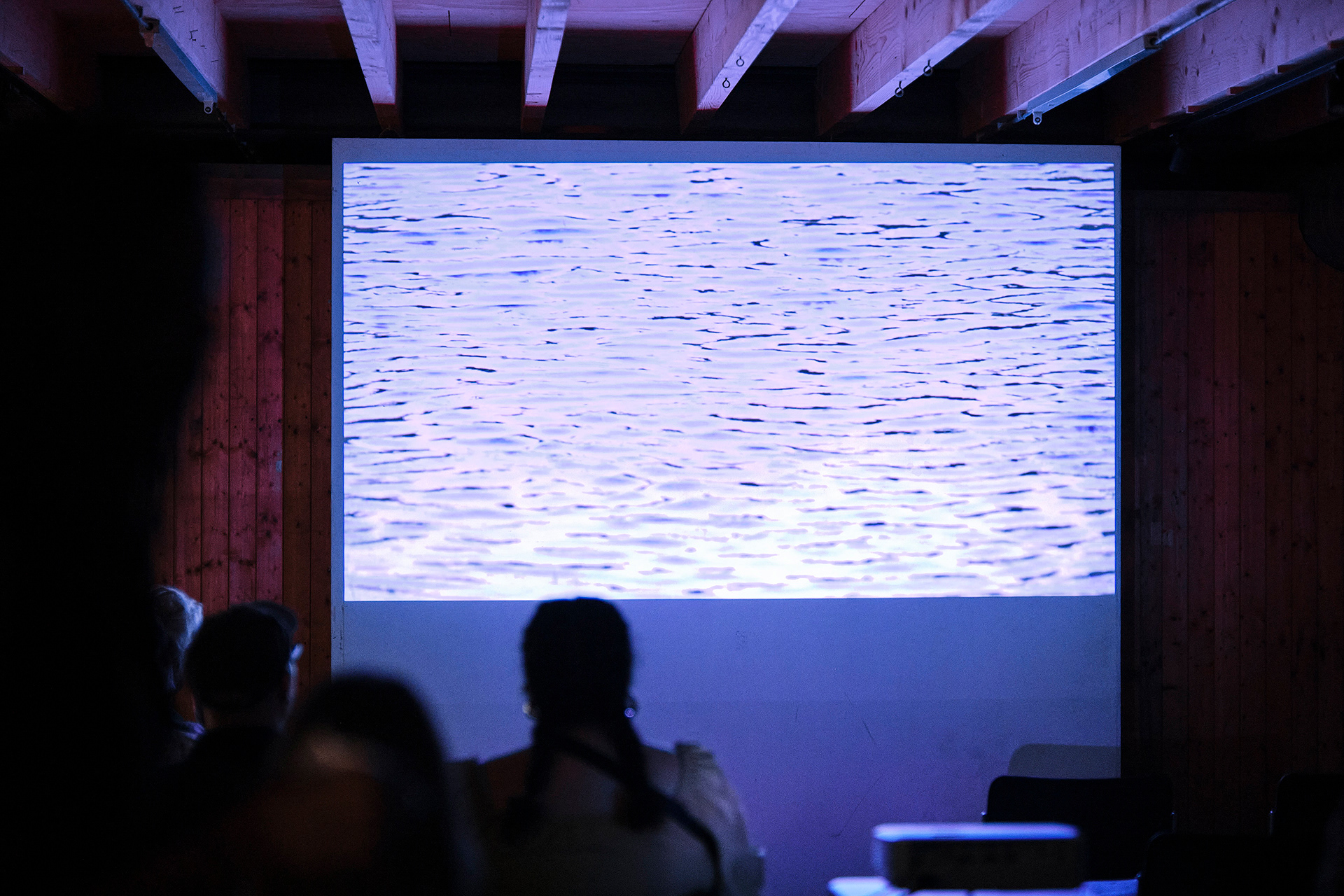
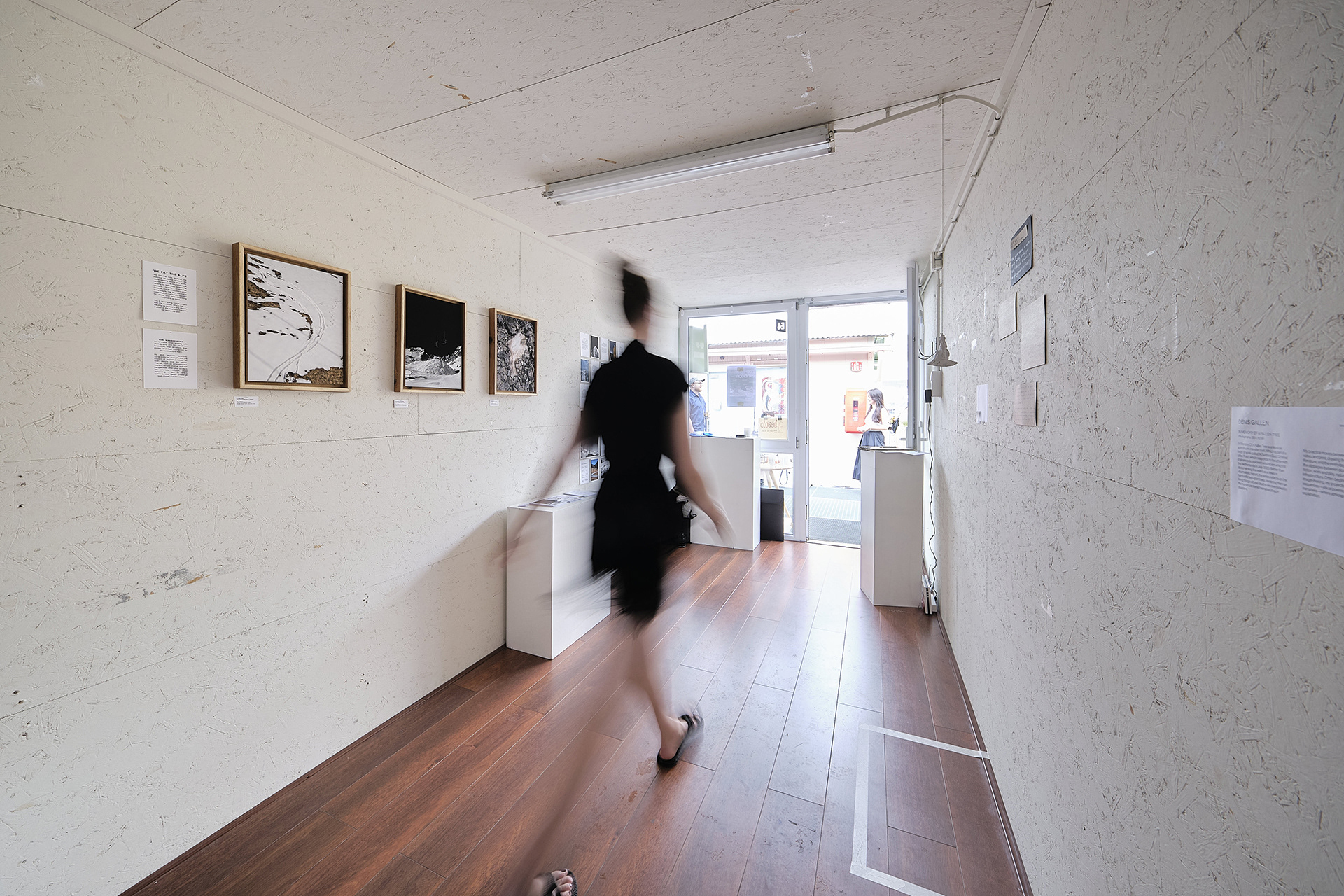
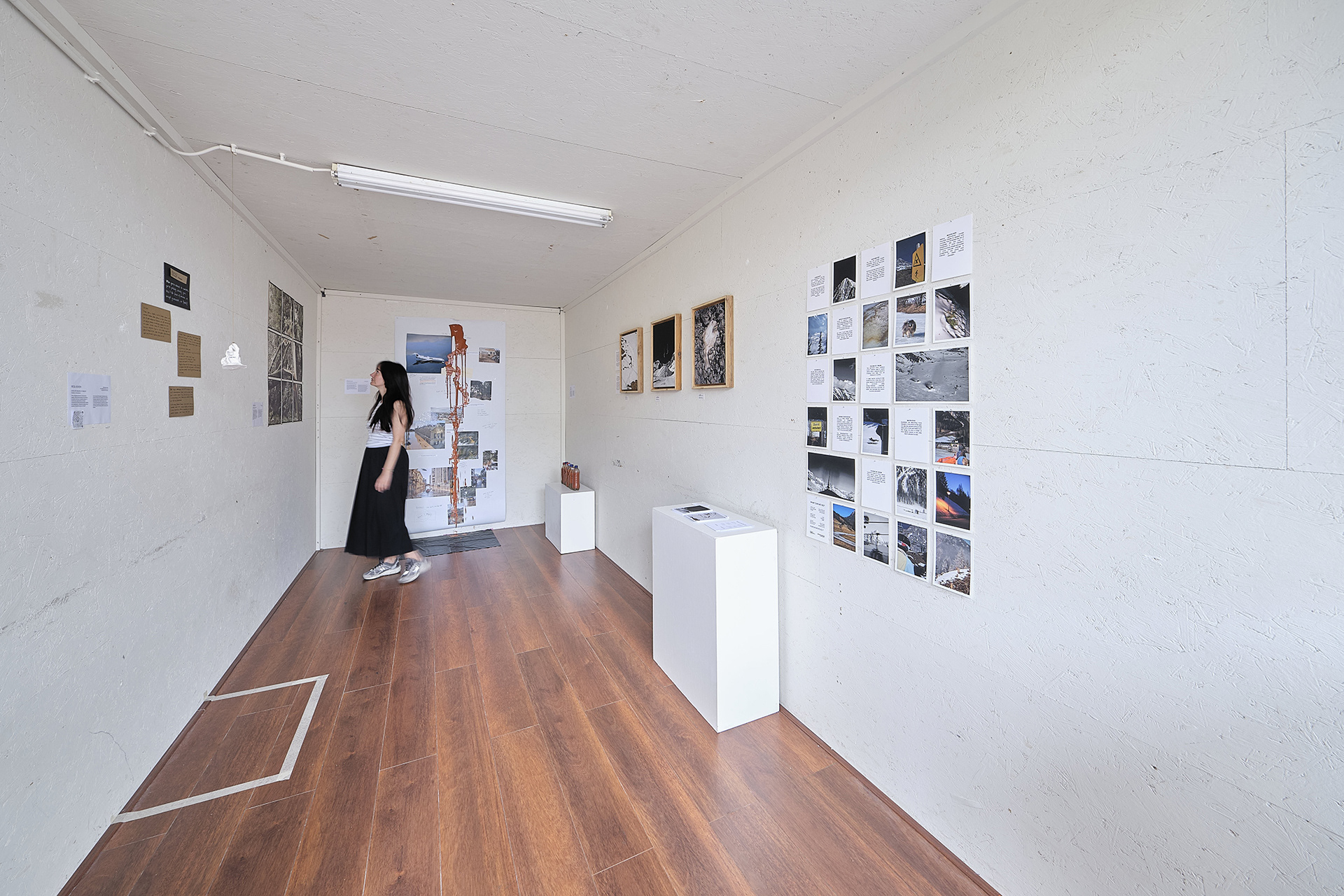
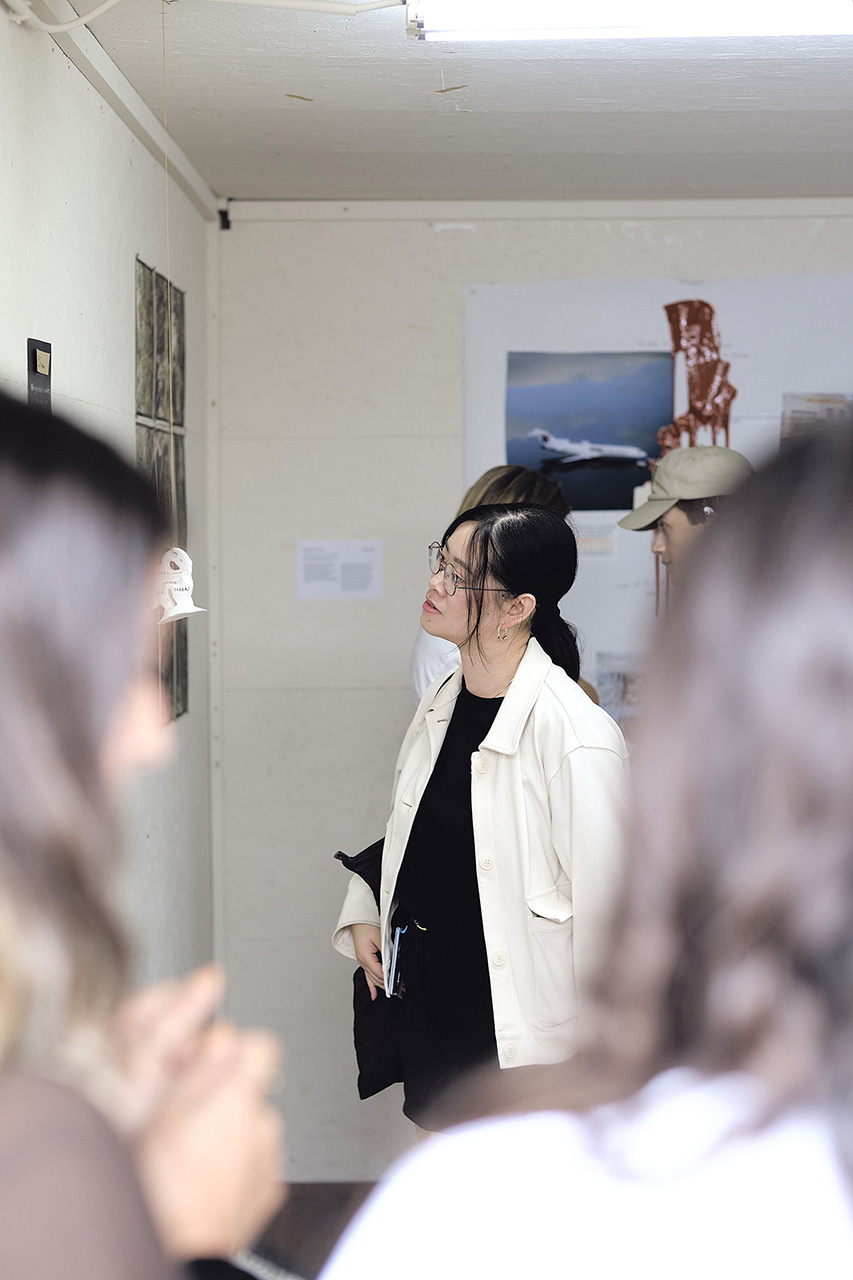
As the final exhibition for the summer pop-up, this edition featured many contributing artists with a visual art exhibition in the pop-up space as well as performers in the larger pavilion. The visual art exhibition included works in photography, installation, and sculpture, while the pavilion housed dance & poetry performances in addition to video screenings.
Photos by Vere Maagdenberg
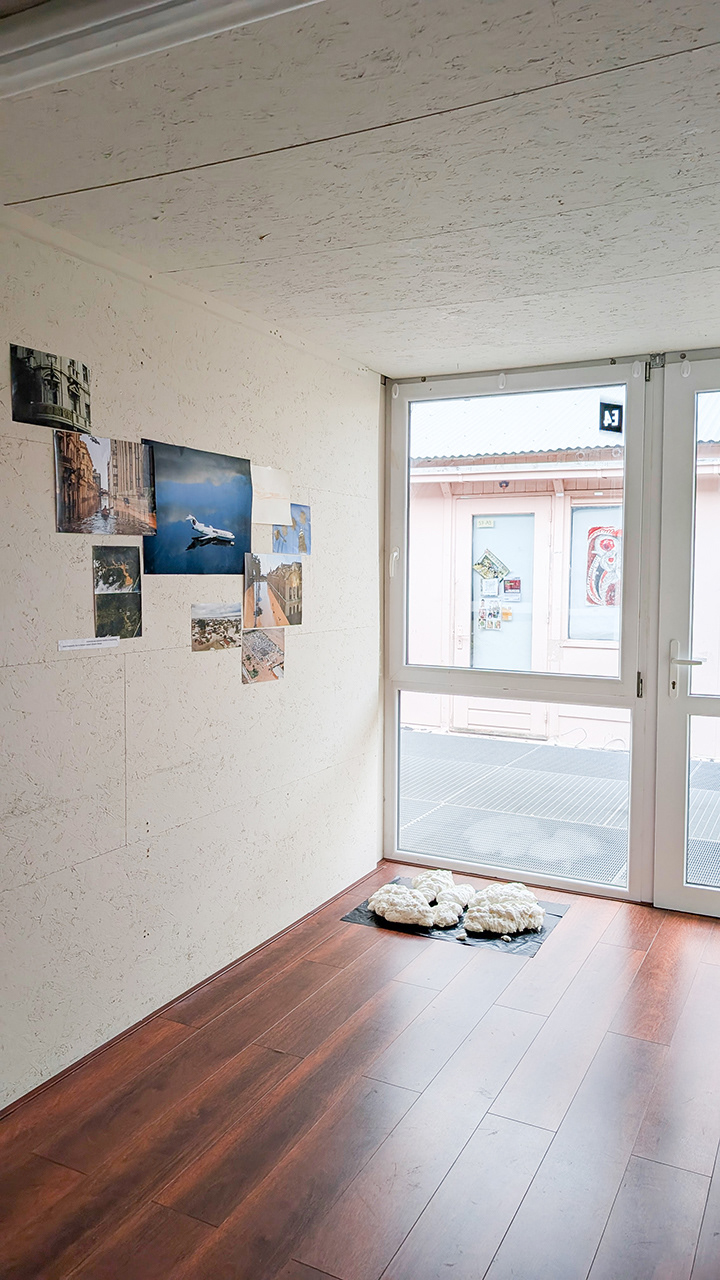
Pop-up 1: works in progress The River is a Body & Barren Earth
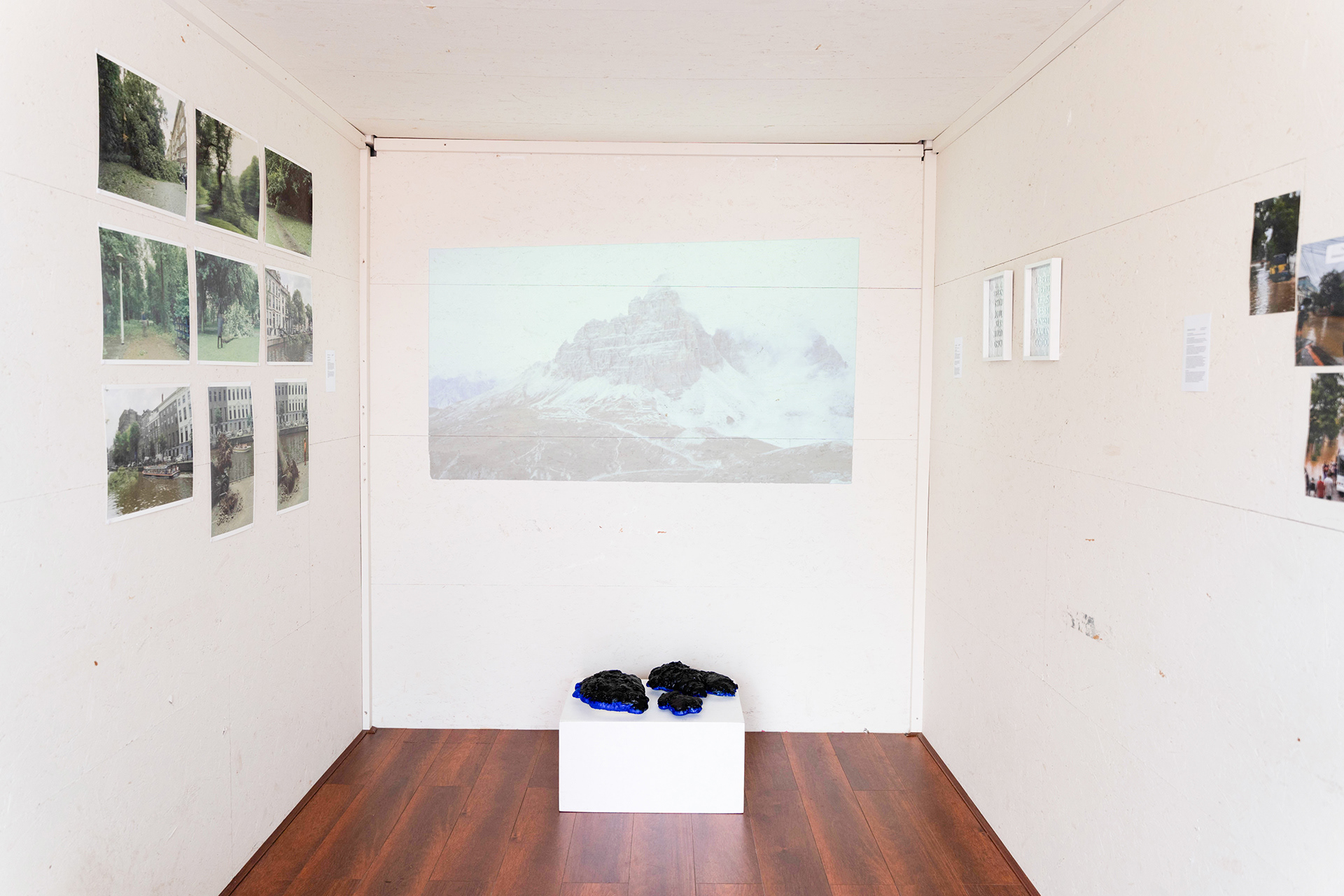
Pop-up 2: In Memory Of A Fallen Tree - Denis Gallen, Mountain Life - Lyanne Keegstra, Barren Earth - Bruna Souza
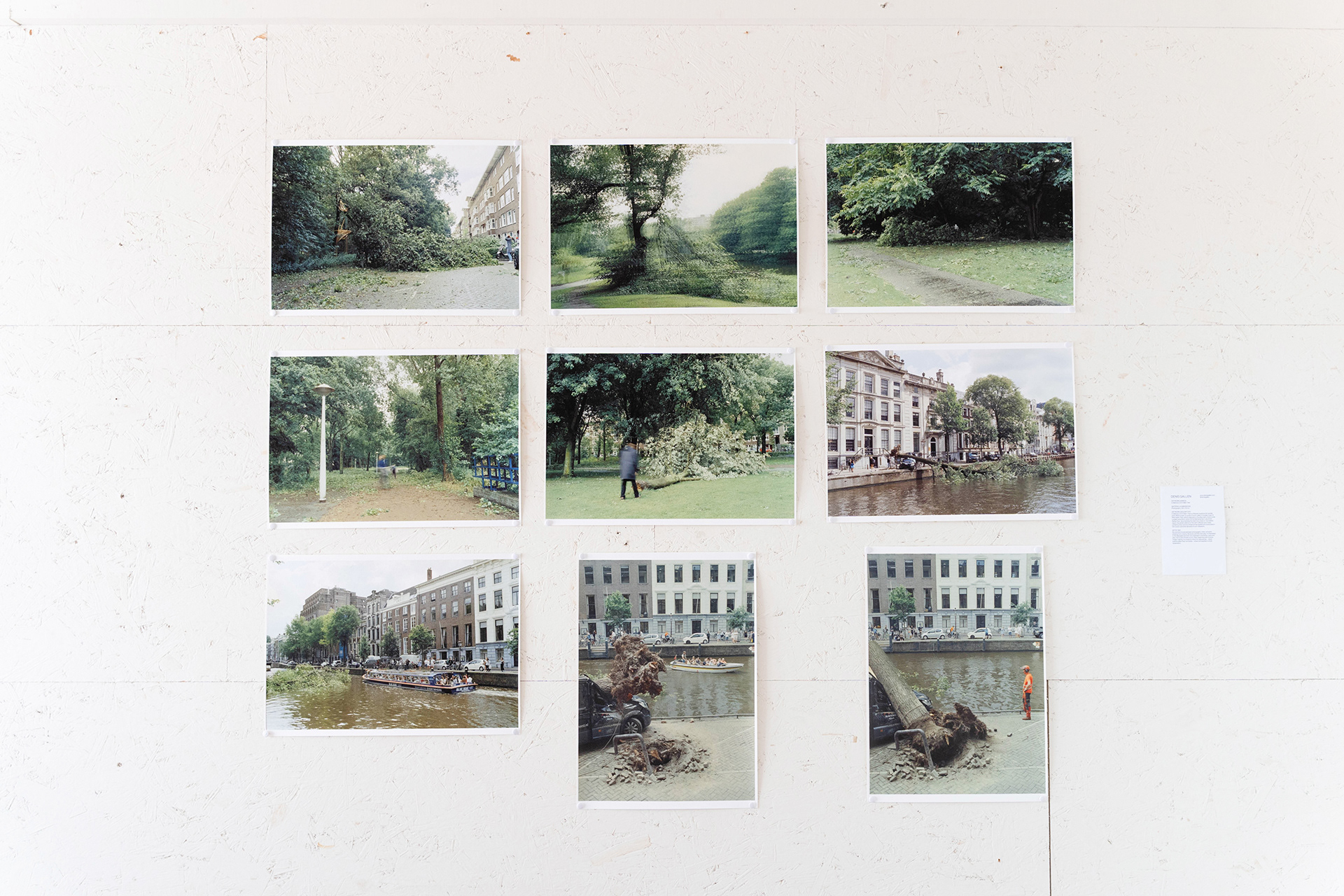
Pop-up 2: In Memory Of A Fallen Tree - Denis Gallen
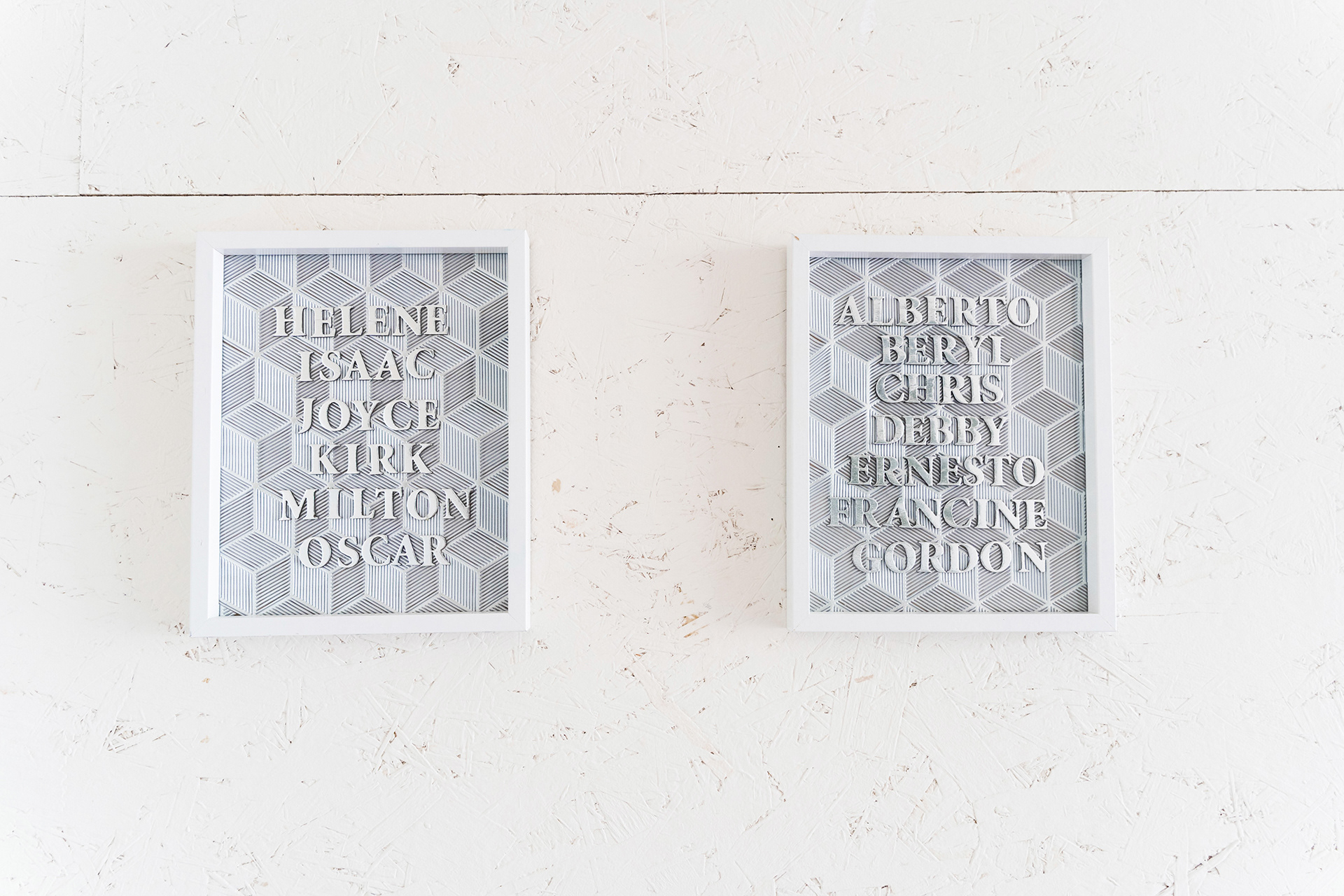
Pop-up 2: Only the mild ones return - Karin Balog
Pop-up 3
Pop-up 3
Pop-up 3
Pop-up 3
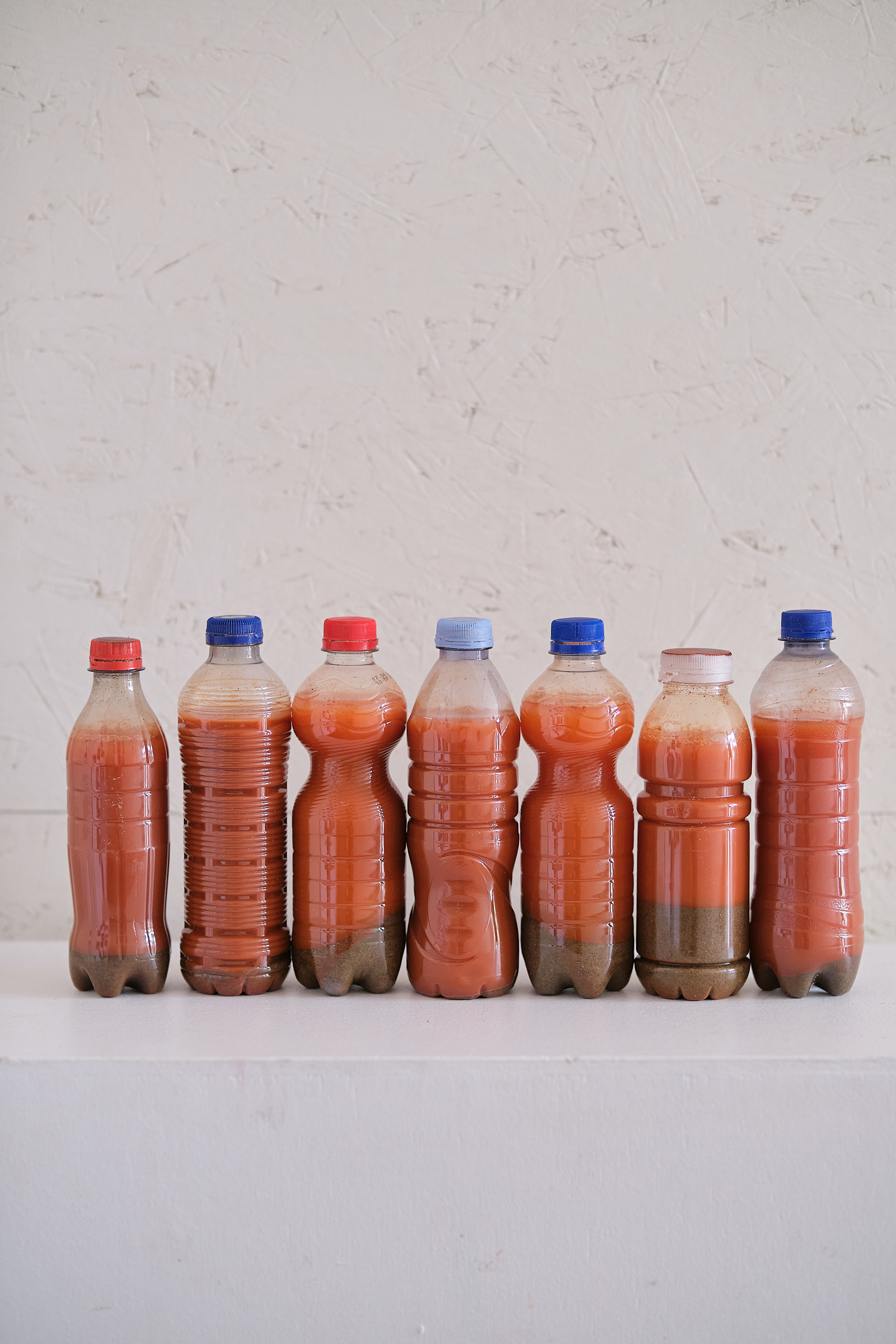
Pop-up 3: Water, water, everywhere, not a drop to drink - Bruna Souza
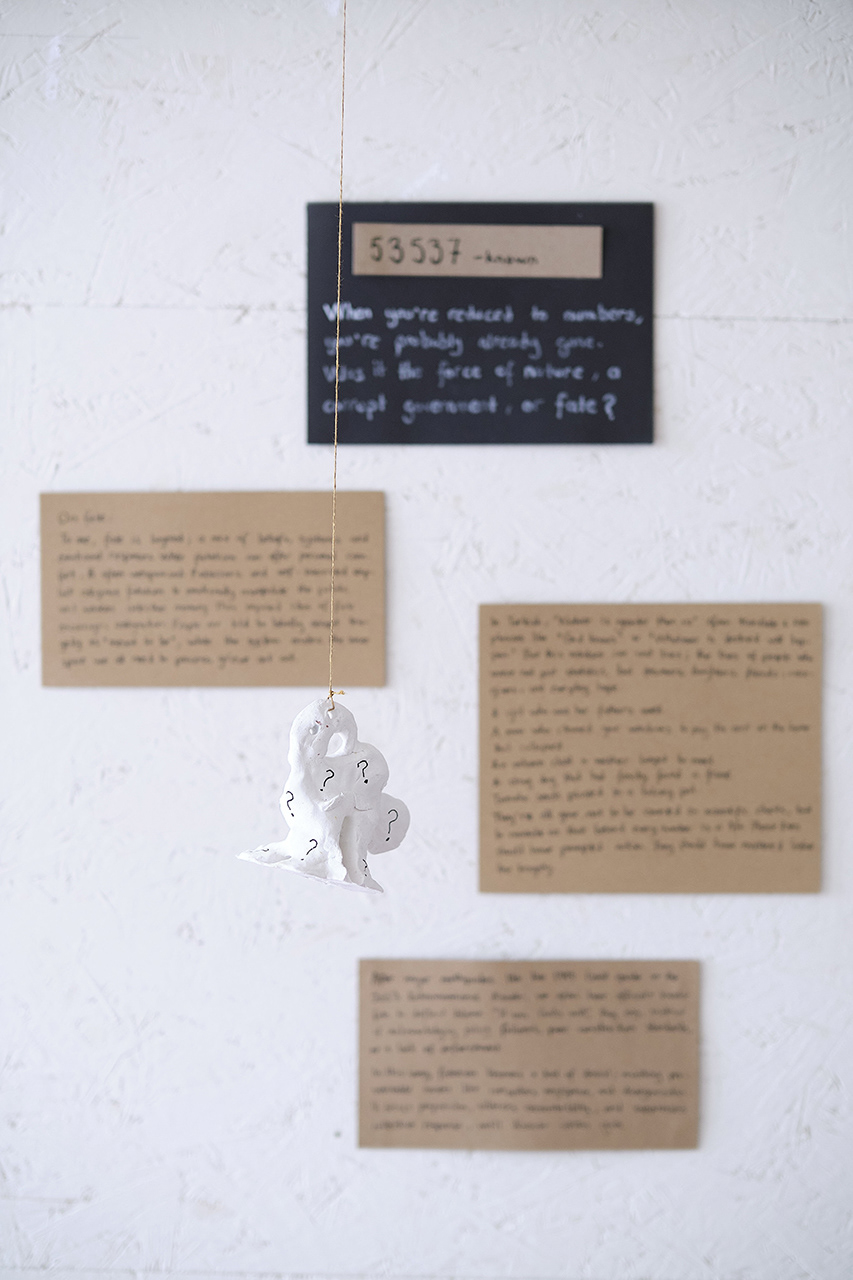
Pop-up 3: Does life hang by a thread? - Seçil Güven
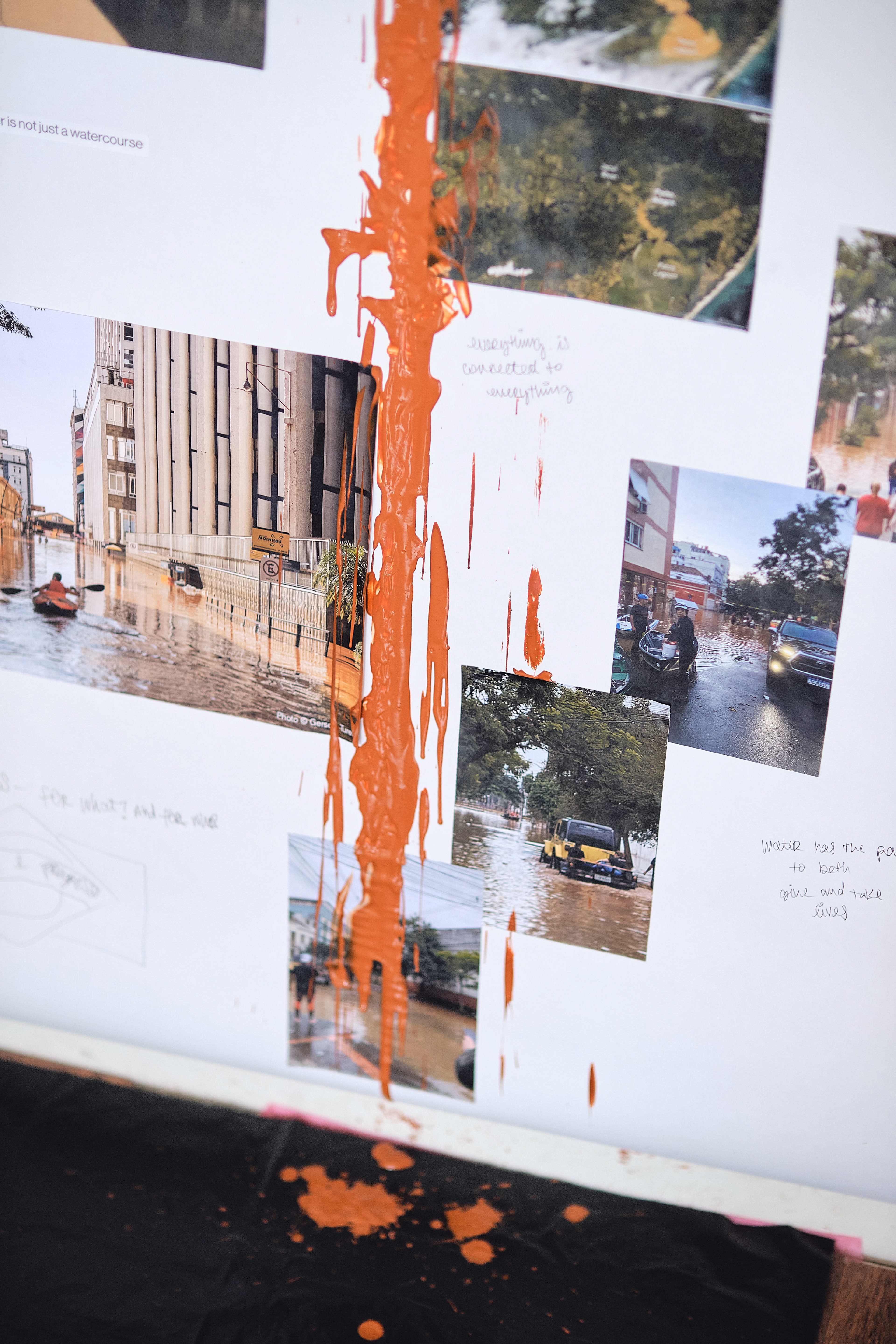
Pop-up 3: When the River Spoke, No One Listened - Bruna Souza
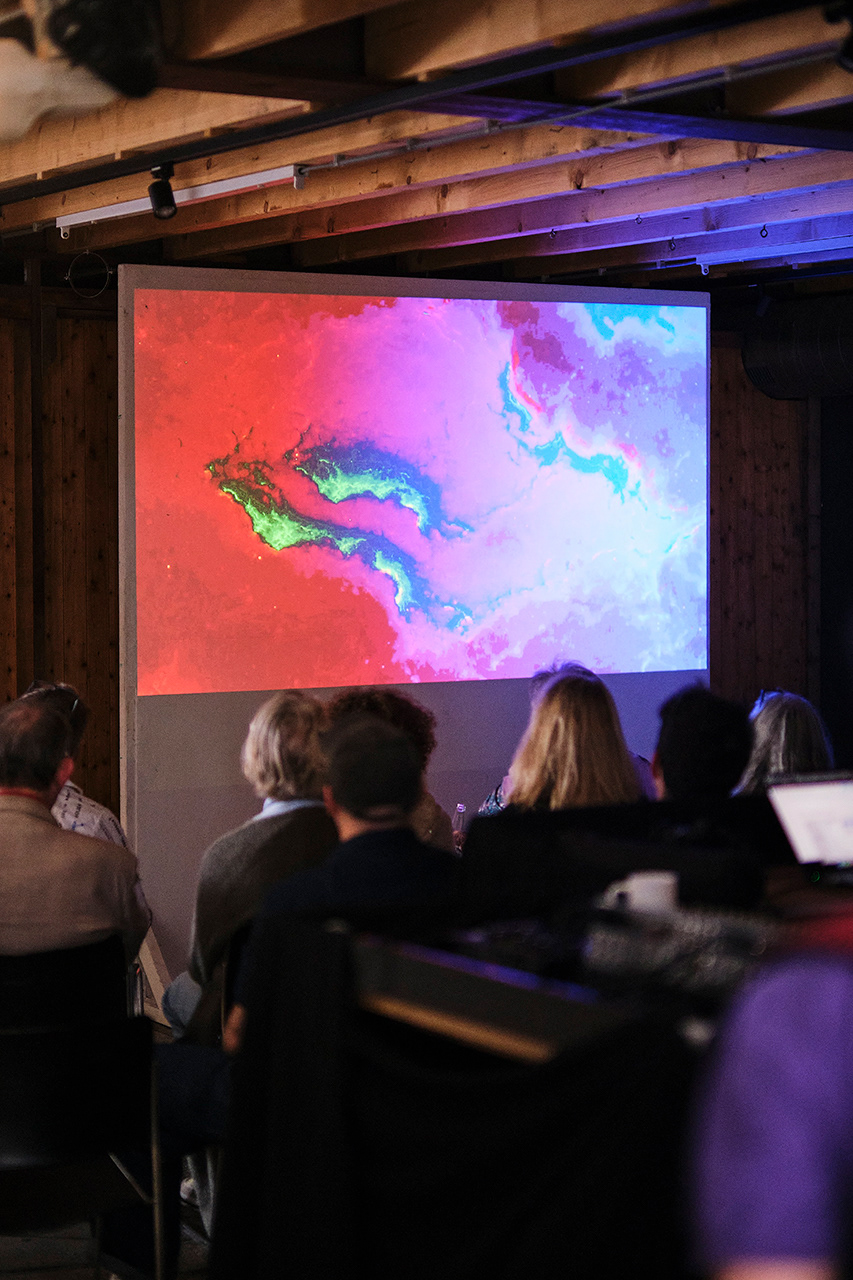
Pop-up 3: Absolute Zero - Karin Balog
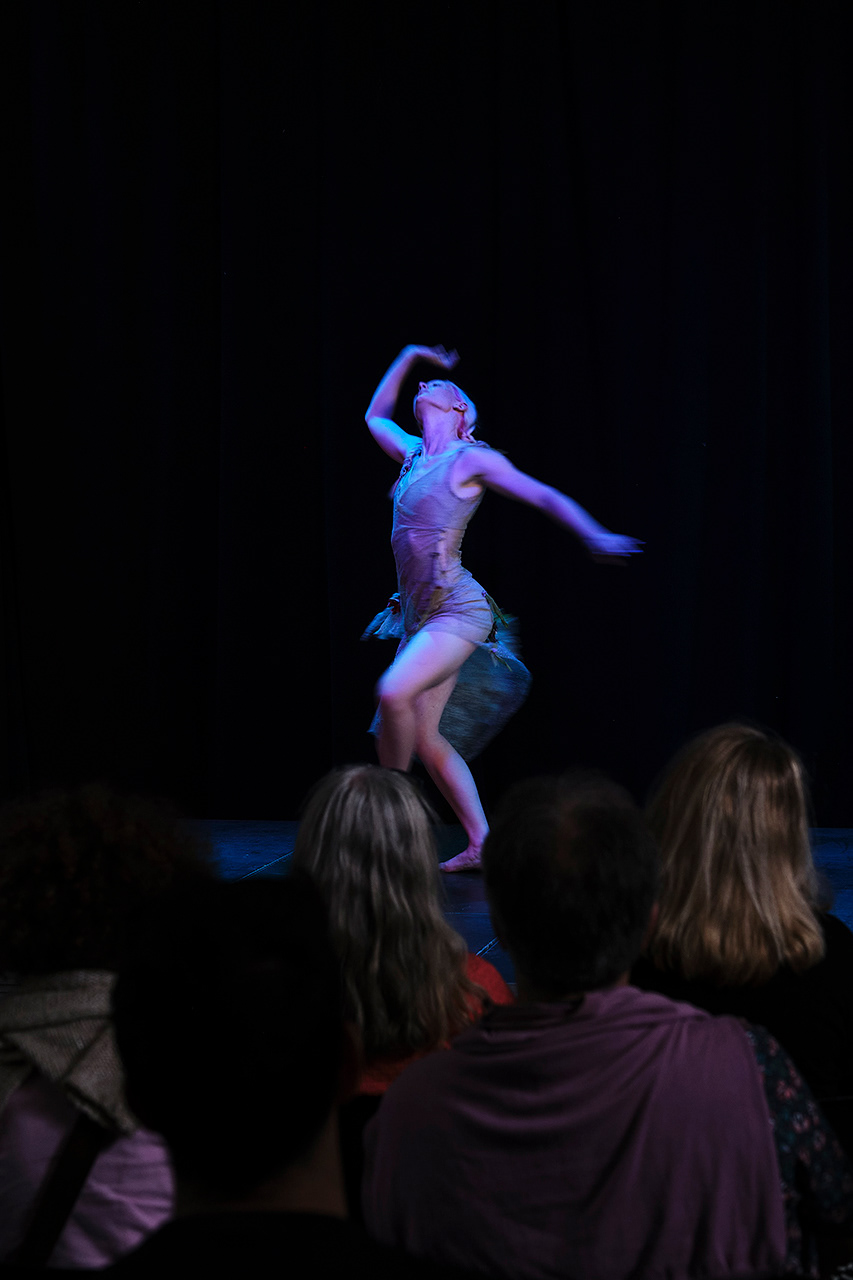
Pop-up 3: Nothing But Nerve Endings - Laura Goossens
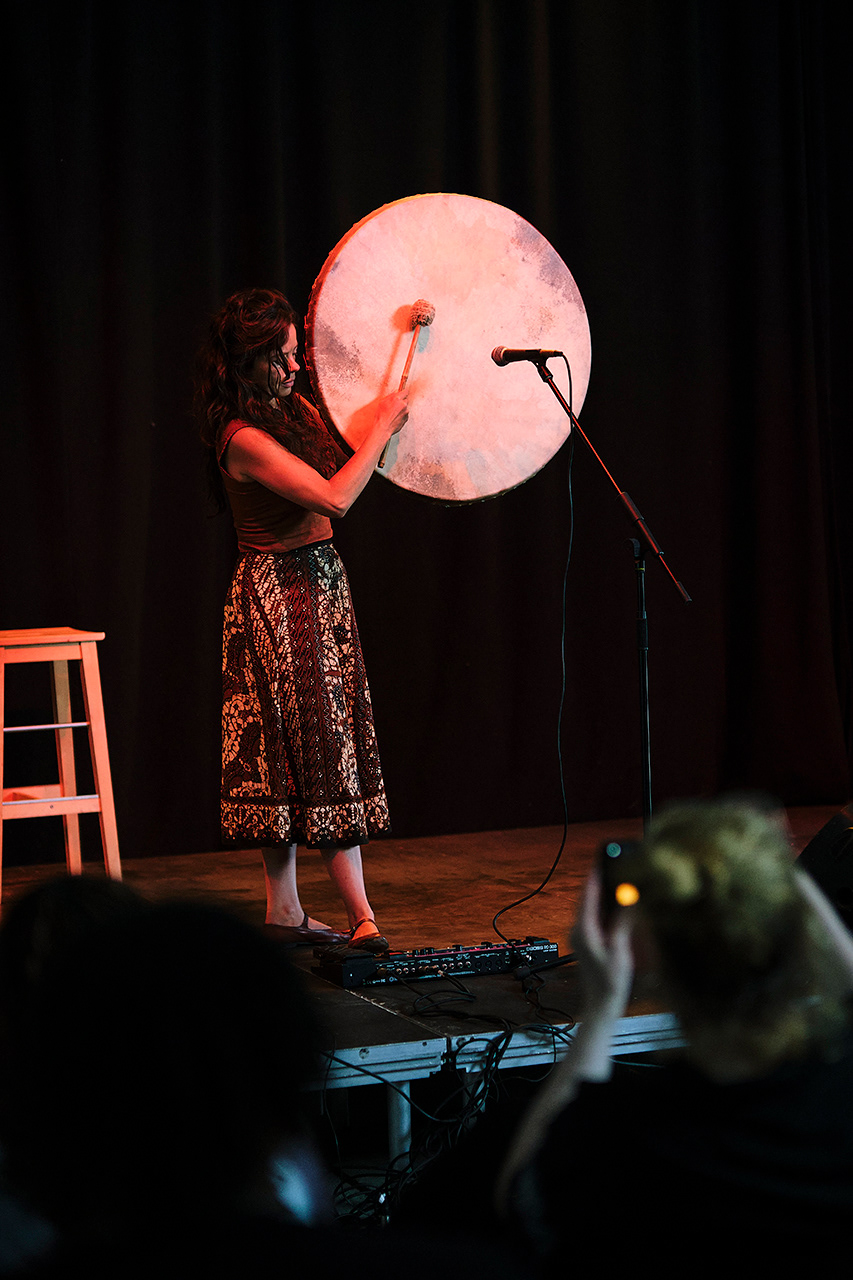
Pop-up 3: Failure Notice Resurrection - Roberta Petzoldt
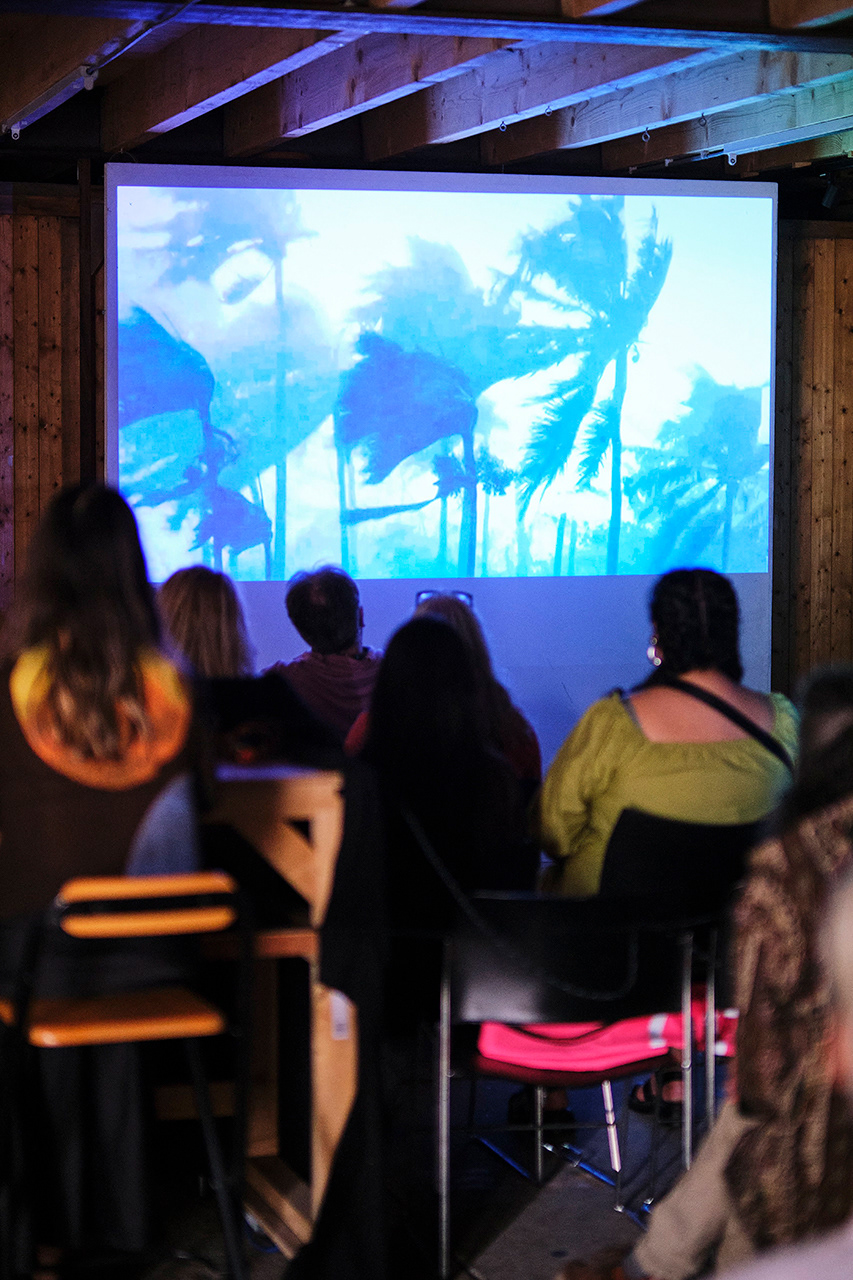
Pop-up 3: Typhoon Yolanda - Jacco Groen
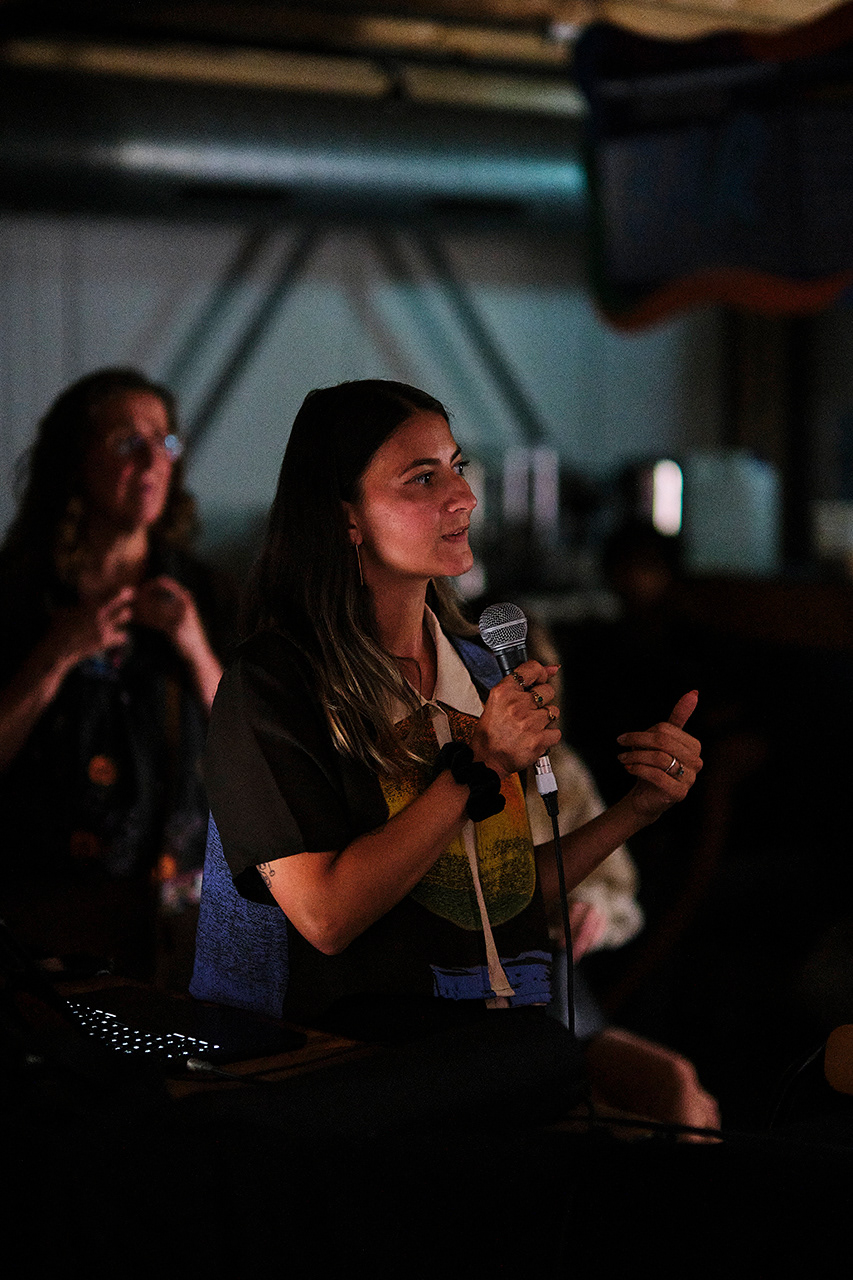
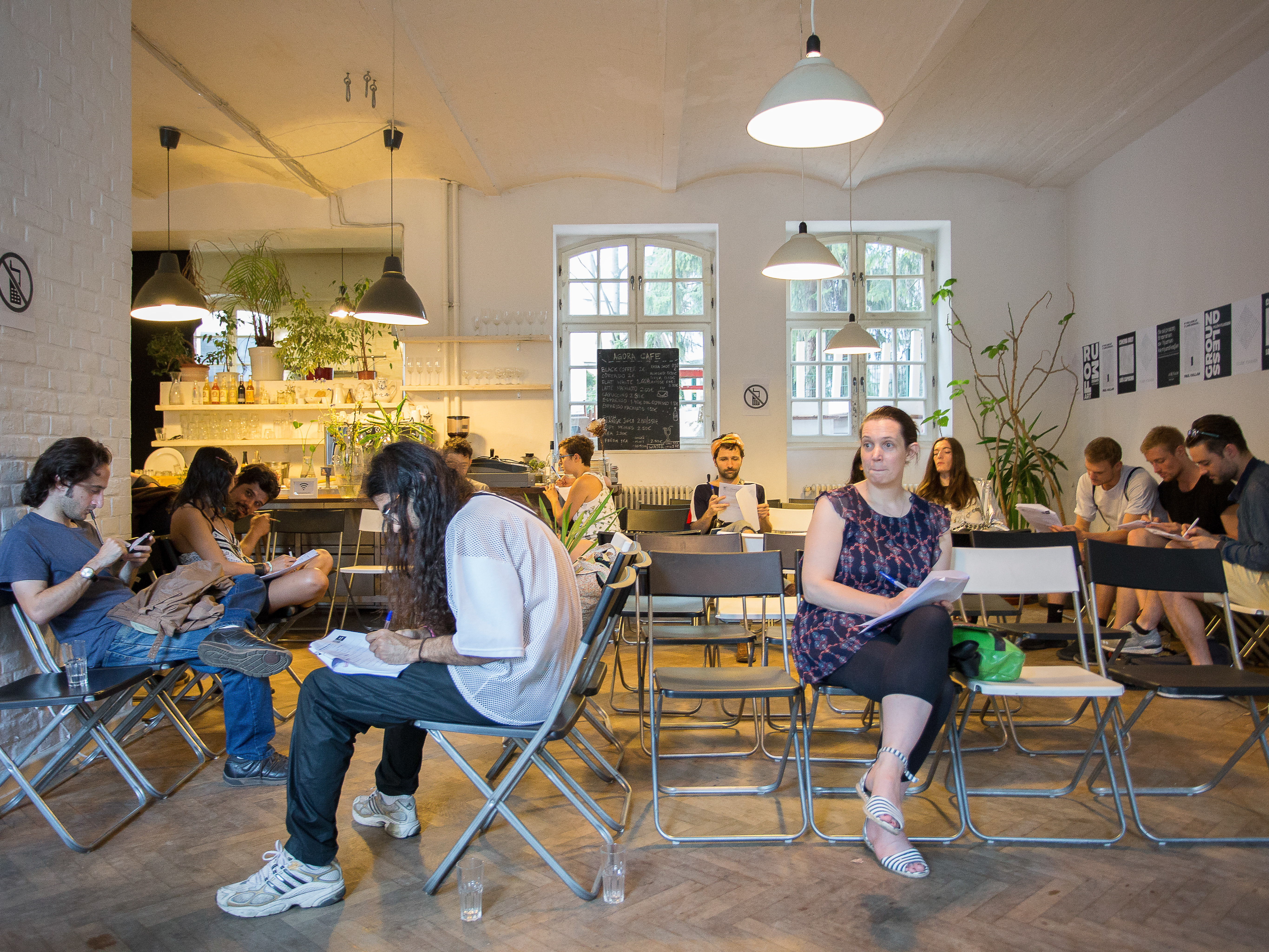
Pop-up 3: curator introduction by Bruna Souza